To clean Persian rug fringe safely, first remove loose dust and inspect the threads for fraying or damage. Gently separate the fringe with your fingers, then dab lightly with cool water and a small amount of mild, pH-neutral detergent. Rinse with a clean, damp cloth, blot away moisture, and let the fringe dry flat with good airflow. Never use chlorine bleach, harsh whitening products, aggressive scrubbing, or a washing machine. For silk, antique, valuable, or damaged Persian rugs, professional rug cleaning is the safer option.
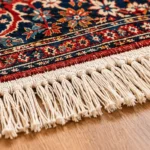
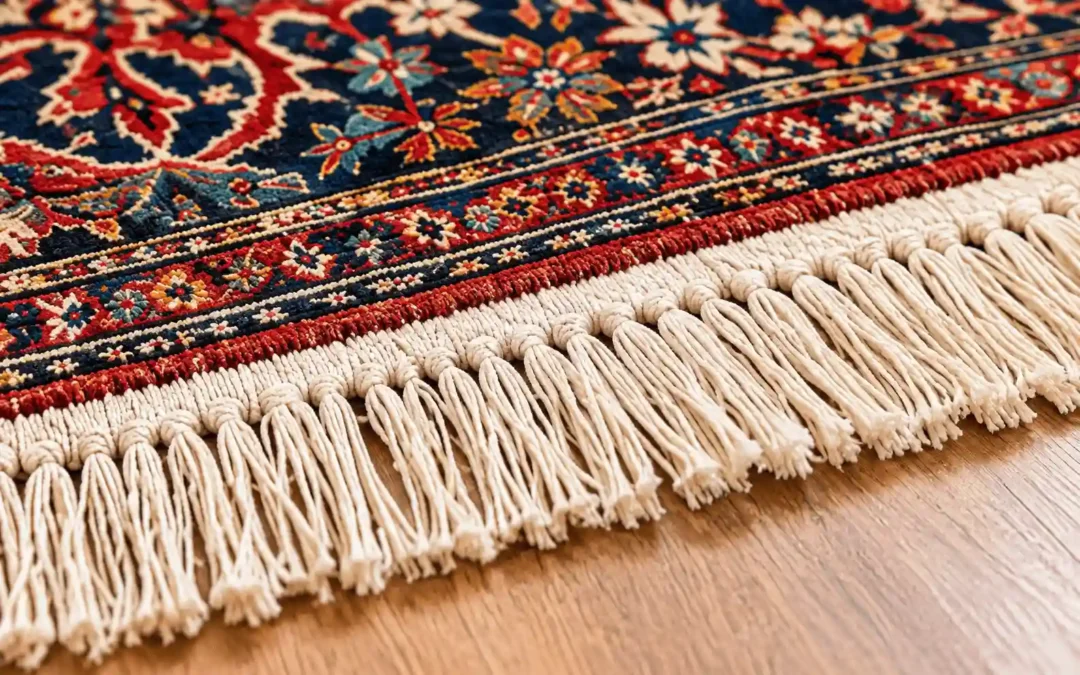
Persian rug fringe is more than decoration. On a genuine hand-knotted rug, it is usually the exposed end of the warp threads that form part of the rug’s foundation. That means careless cleaning, pulling, cutting, or repeated vacuuming can damage the rug over time.
Can You Clean Persian Rug Fringe at Home?
Yes, lightly soiled, stable fringe can usually receive gentle maintenance at home. The important thing is knowing when to stop.
DIY cleaning may be reasonable when the fringe is:
- Lightly dusty or mildly grey from surface soil
- Strong and free from fraying
- Not silk or particularly delicate
- Not attached to an antique or highly valuable rug
- Free from loose threads or unraveling
Professional Persian rug cleaning is safer when the fringe is silk, brittle, heavily yellowed, stained, frayed, unraveling, or already damaged.
Check the Fringe Before Cleaning
Before applying any water, inspect the fringe closely.
Look for:
- Broken or thinning threads
- Fraying where the fringe meets the rug
- Loose or missing sections
- Brown, yellow or grey discoloration
- Stiff or brittle fibres
- Previous bleach or chemical damage
- Fringe pulling away from the rug body
If the fringe is unraveling at the edge, don’t try to make it look neater by cutting it. On a hand-knotted Persian rug, the fringe can be part of the foundation, so damage may spread into the rug’s knotted structure.
What Is Persian Rug Fringe Made From?
The fringe may be made from cotton, wool, or silk, depending on the rug’s construction, age, and origin.
- Cotton: Common and relatively durable, but it can shrink or discolour when over-wetted.
- Wool: Strong but can mat or felt when exposed to excessive moisture, heat or friction.
- Silk: Much more delicate and easily affected by moisture, chemicals, and rubbing.
If you are unsure what the fringe is made from, avoid experimenting with cleaning chemicals.
How to Clean Persian Rug Fringe
1. Remove Dry Dust First
Start with the rug completely dry.
Vacuum the main rug using suitable suction and keep rotating brushes or beater bars away from the fringe. For delicate or antique rugs, clean the fringe by hand instead.
Shake loose dust away gently or use a soft brush to move debris outward along the direction of the fringe.
The goal is to remove dry soil before introducing moisture.
2. Gently Separate Tangled Fringe
Use your fingers or a wide-tooth comb to separate tangled strands.
Work from the rug edge toward the tips and never force a knot through the fringe. If a section resists, loosen it gradually with your fingers.
Do not pull hard to make every strand perfectly straight. Handmade fringe naturally varies in length and texture.
3. Prepare a Mild Cleaning Solution
Mix a small amount of mild, pH-neutral, colourless detergent with cool water.
Avoid:
- Chlorine bleach
- Strong carpet chemicals
- Optical brighteners
- Harsh stain removers
- Hot water
- Abrasive powders
Test the solution on a small, inconspicuous area first, particularly if the rug is old or contains natural dyes.
4. Dab Along the Fringe
Dip a clean white cloth into the solution and wring it thoroughly.
The cloth should be damp, not dripping wet.
Starting near the base, gently dab or wipe along the direction of the fringe. Work in small sections rather than soaking the entire edge.
Never aggressively scrub the threads. Friction can roughen, weaken, and fray the fibres.
5. Remove Soap Residue
Use another clean cloth dampened with plain cool water.
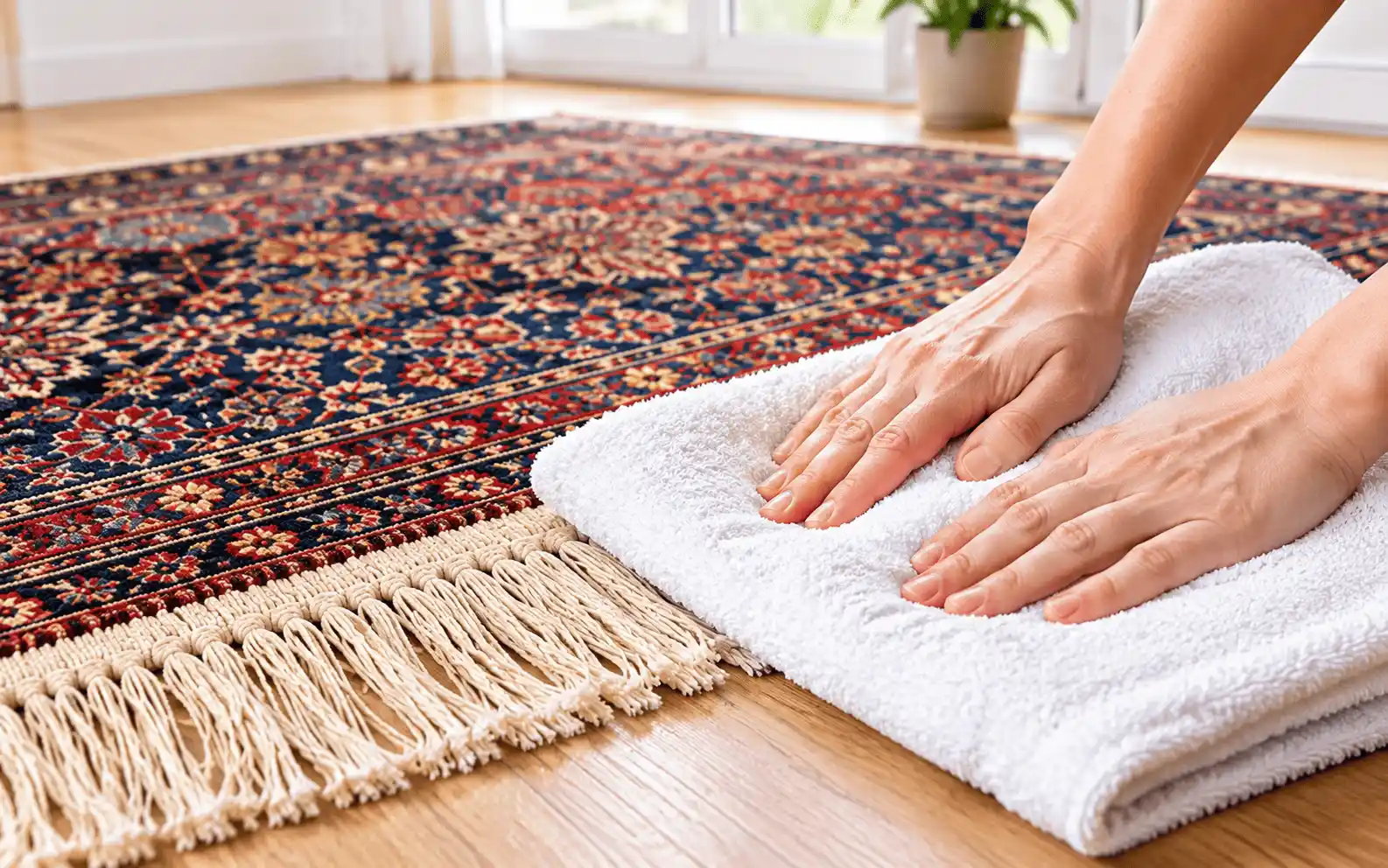
Lightly dab the fringe to remove remaining detergent, then blot with a dry towel.
Do not saturate the fringe or allow water to run into the rug’s pile and foundation.
6. Dry the Fringe Completely
Place the rug flat in a clean, well-ventilated area.
Use absorbent towels to remove excess moisture and allow the fringe to air-dry completely.
Avoid:
- Hair dryers
- Radiators
- Direct heat
- Prolonged harsh sunlight
- Hanging the rug by its fringe
Once dry, gently straighten the strands with your fingers.
How to Clean Yellow or Grey Persian Rug Fringe
Yellow or grey fringe is not always simply “dirty.”
Discolouration can come from:
- Ground-in soil
- Dust and oils
- Old detergent residue
- Moisture exposure
- Oxidation and ageing
- Previous chemical treatments
- Staining
Start with gentle dry cleaning and a mild hand-cleaning method. If the colour improves, the discolouration was likely at least partly surface soil.
However, age-related yellowing cannot always be safely returned to bright white. Trying to force an aged fringe white with bleach or aggressive whitening chemicals can weaken the foundation threads.
For valuable Persian rugs, an experienced rug cleaner can determine whether the fringe needs cleaning, specialised treatment, or simply careful preservation.
Can You Use Bleach on Persian Rug Fringe?
No. Avoid household chlorine bleach on Persian rug fringe. Bleach can weaken natural fibres, cause brittleness and create permanent colour changes. It can be particularly damaging when the fringe forms part of the rug’s foundation.
Do not assume a white-looking fringe needs to be made bright white. Natural ivory, beige or slightly aged fringe can be completely normal on an older Persian rug.
Professional rug cleaners may use specialised treatments for suitable fibres when necessary, but these should not be confused with household bleach or general-purpose whitening products.
Can You Vacuum Persian Rug Fringe?
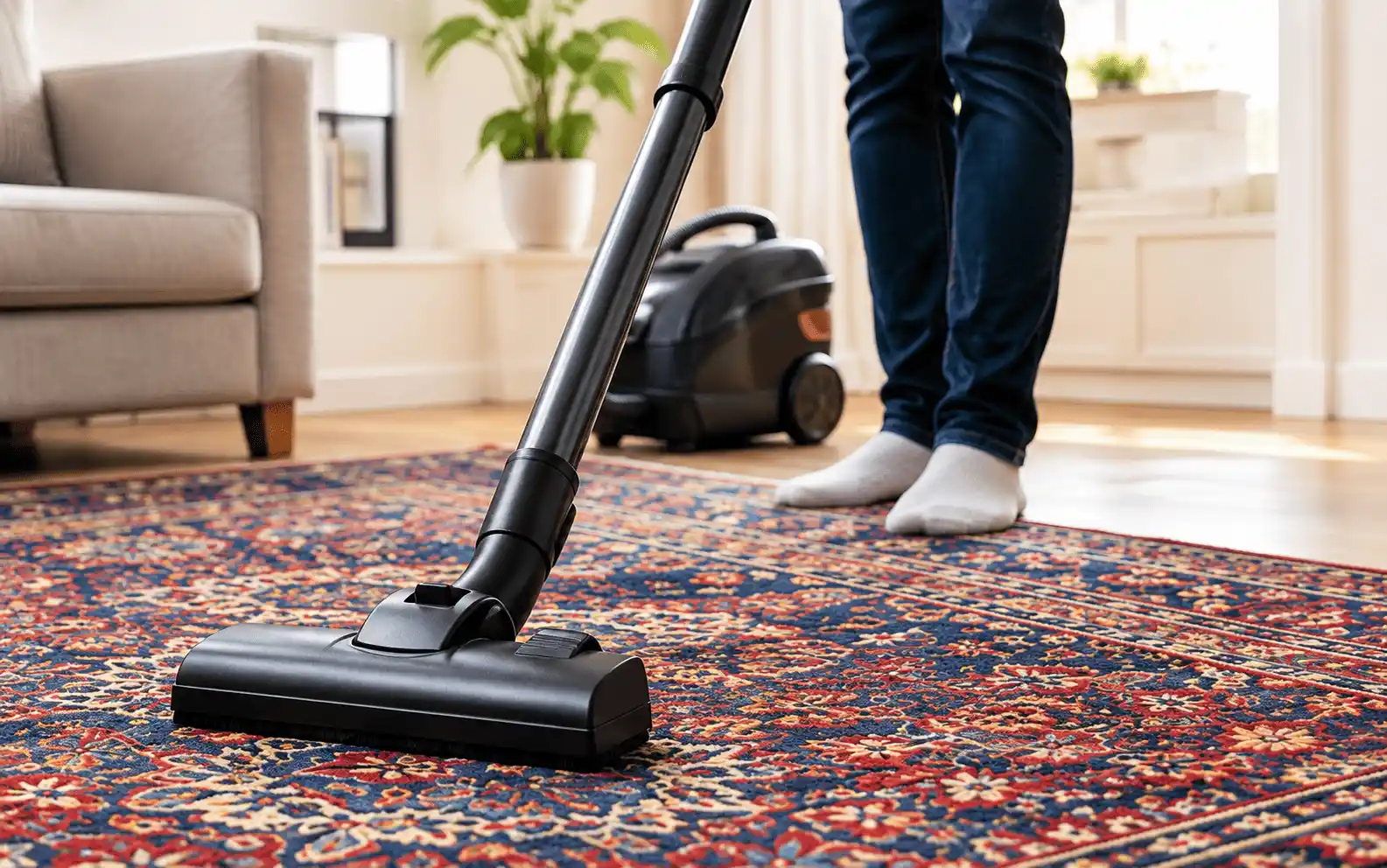
Avoid running a rotating vacuum brush or beater bar over the fringe.
For valuable, antique, or fragile Persian rugs, the safest approach is to clean the fringe gently by hand rather than repeatedly pulling it with a vacuum nozzle.
Regularly vacuum the rug body while keeping mechanical agitation away from the fringe.
When Should You Avoid DIY Fringe Cleaning?
Professional Persian rug cleaning is recommended when:
- The fringe is silk
- The rug is antique or valuable
- Threads are fraying or unraveling
- The fringe has become brittle
- There is heavy staining
- Previous bleach or chemical treatment has caused damage
- The fringe is heavily yellowed or matted
- You are unsure about the fibre or dye stability
Fringe damage can become a structural problem if the warp threads begin breaking or pulling away from the rug.
How Often Should Persian Rug Fringe Be Cleaned?
Light dusting and gentle straightening can be done regularly as part of normal rug care.
A deeper fringe cleaning should depend on the rug’s condition, household traffic, pets, spills, and the type of fibre. Avoid cleaning simply because a certain number of months has passed.
Over-cleaning can be just as undesirable as neglecting the fringe.
Frequently Asked Questions
Can I use a washing machine to clean Persian rug fringe?
No. Machine washing can create excessive agitation, moisture, and friction and may cause shrinkage, dye bleeding, or fibre damage.
Can I use vinegar on Persian rug fringe?
Avoid experimenting with vinegar or other household acids unless the fibre and dyes have been assessed. Natural fibres and dyes can react differently to cleaning solutions.
How do I make Persian rug fringe white?
First, determine whether the discolouration is dirt, staining, or age-related oxidation. Gentle cleaning may remove surface soil, but aged fringe should not be aggressively whitened. Chlorine bleach should never be used.
Can I cut the fringe off my Persian rug?
Do not cut structural fringe off a hand-knotted Persian rug. The fringe can be connected to the warp foundation, and cutting it incorrectly can contribute to unraveling.
Why is my Persian rug fringe turning yellow?
Possible causes include soil, old cleaning residue, moisture, oxidation, and ageing. Yellowing does not automatically mean the fringe needs a stronger chemical cleaner.
Why is my Persian rug fringe unraveling?
Fringe can unravel because of friction, vacuum damage, pulling, wear, or weakened foundation threads. Early professional assessment can help prevent the damage from progressing into the rug body.
Professional Persian Rug Fringe Cleaning in Sydney
If your Persian rug fringe is heavily soiled, yellowed, fragile, or already showing signs of damage, it’s better to have it assessed before attempting stronger cleaning methods.
Devine Rug Care has been hand-cleaning rugs across Sydney for more than 38 years, with experience caring for Persian, Oriental, wool, silk, and other specialty rugs. Fringe can be assessed and treated as part of the overall rug cleaning process rather than being treated as an afterthought.
For delicate or valuable rugs, the goal isn’t to make the fringe look artificially white. It’s to remove removable soil while protecting the fibres, foundation, and character of the rug.
If your Persian rug needs specialist care, contact Devine Rug Care for an assessment and a suitable cleaning recommendation.