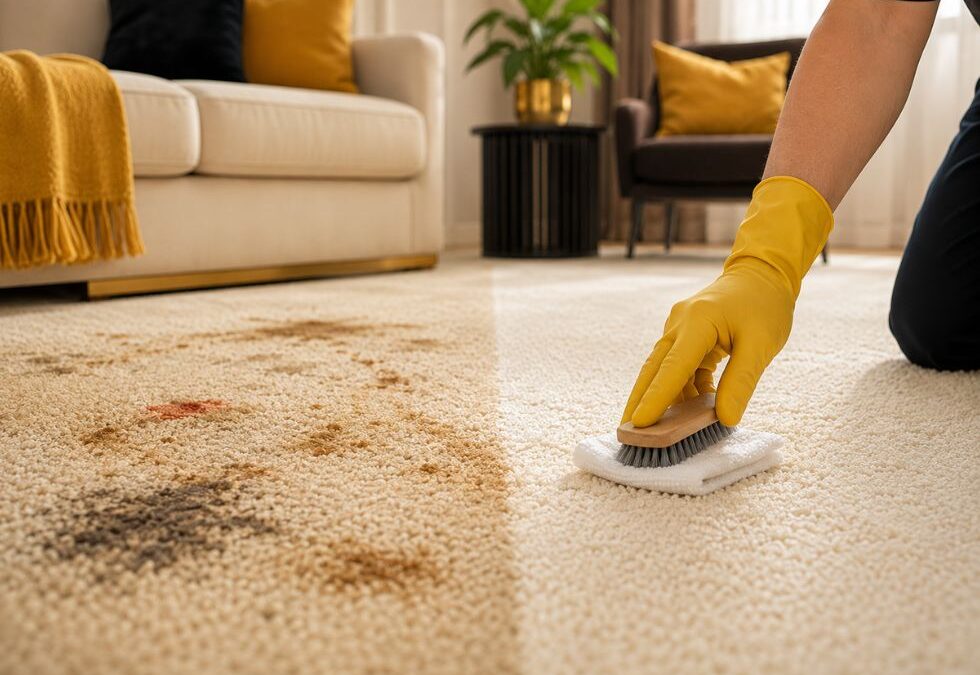
Carpet stains can happen in seconds, a cup of coffee tips over, a plate of food slips during dinner, muddy shoes track marks near the entrance, or a pet has an accident on the rug. It’s frustrating in the moment, but here’s the good news: most everyday stains can be treated successfully at home if you act quickly and use the right method for the right stain.
The mistake most people make isn’t waiting too long, it’s reacting the wrong way. Scrubbing hard, dumping on too much water, or grabbing whatever cleaner is under the sink can push a stain deeper into the carpet or damage the fibers permanently. A stain that could have disappeared in five minutes can turn into a permanent mark simply because of how it was cleaned.
This guide covers everything you need to know: why speed matters, how to identify what you’re dealing with, step-by-step methods for the most common stains, how to handle old and set-in marks, natural cleaning alternatives, how to dry and deodorize your carpet properly, mistakes to avoid, and when it’s smarter to call in a professional.
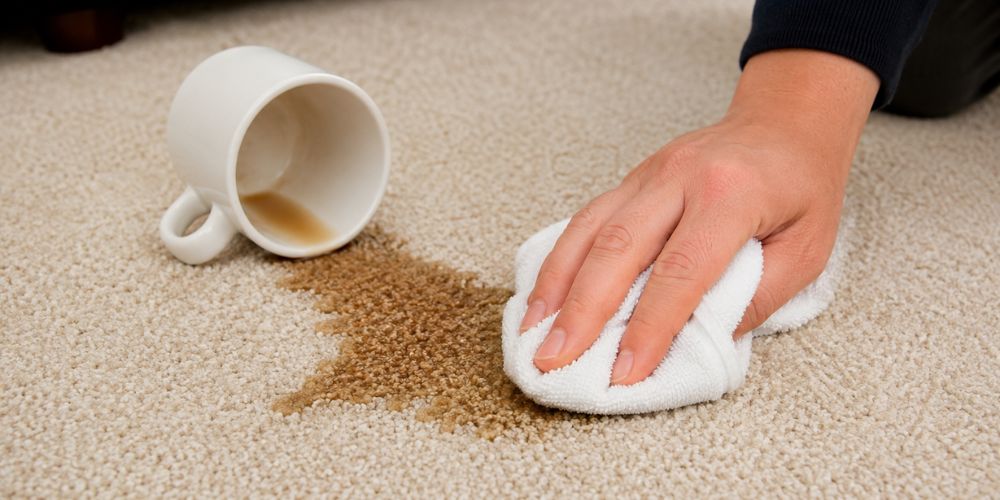
Why Should You Remove Carpet Stains Quickly?
Carpet fibers are absorbent, and so is the padding underneath them. The moment a liquid or substance touches the carpet, a clock starts running. The longer it sits, the further it travels, first into the fibers, then down to the backing, and eventually into the padding itself. Once a stain reaches the padding, surface cleaning alone usually isn’t enough to fix it.
Food and organic spills behave differently but are just as time-sensitive. As they dry, sugars, proteins, and dyes bond more tightly to the fibers, which is exactly why a fresh coffee spill wipes up easily while a day-old one leaves a stubborn ring.
Acting quickly helps you:
- Prevent the stain from spreading further into the fibers and padding
- Reduce the chance of permanent discoloration
- Stop odors from developing, especially with food, pet, or protein-based spills
- Make the stain physically easier to lift, since fresh residue hasn’t bonded to the fibers yet
- Preserve the overall look and texture of the carpet over time
That said, speed doesn’t mean force. Reaching for the spill fast is good; scrubbing at it aggressively is not. In almost every case, gentle blotting works better than vigorous rubbing, no matter how urgent the situation feels.
Can You Remove Carpet Stains at Home?
Yes, a large majority of fresh, everyday stains can be handled without calling in a professional. Whether a DIY approach will work depends on a few factors specific to your situation, so it’s worth pausing for a moment before you start:
- How old is the stain? Fresh stains respond far better to home treatment than ones that have already dried or set in.
- What caused it? A water-based drink spill behaves very differently from grease, blood, or pet urine.
- What is the carpet made of? Synthetic carpets (nylon, polyester, olefin) are generally more forgiving than natural fibers like wool or silk.
- Does the carpet have specific care instructions? Some manufacturers specify which cleaning agents are safe to use.
- How large or deep is the stain? A small, contained spill is a very different job than one that has spread across a wide area or soaked through to the padding.
As a rule of thumb: fresh, small-to-medium stains on standard synthetic carpet are excellent DIY candidates. Old stains, large or spreading stains, and anything on delicate, antique, or specialty carpet are safer left to a professional, since a wrong move on these carpets can cause damage that’s expensive, or impossible, to reverse.
Identify the Stain Before You Start Cleaning
Not every stain should be treated the same way, and using the wrong approach can actually make things worse. Before you reach for a cleaner, take a moment to figure out what category the stain falls into.
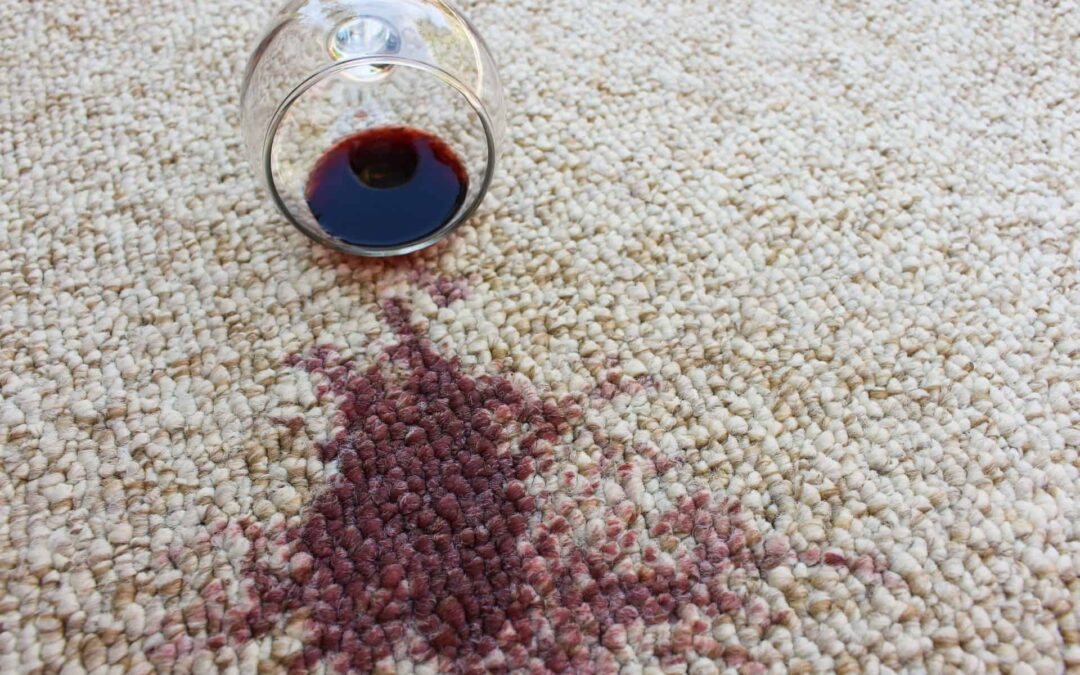
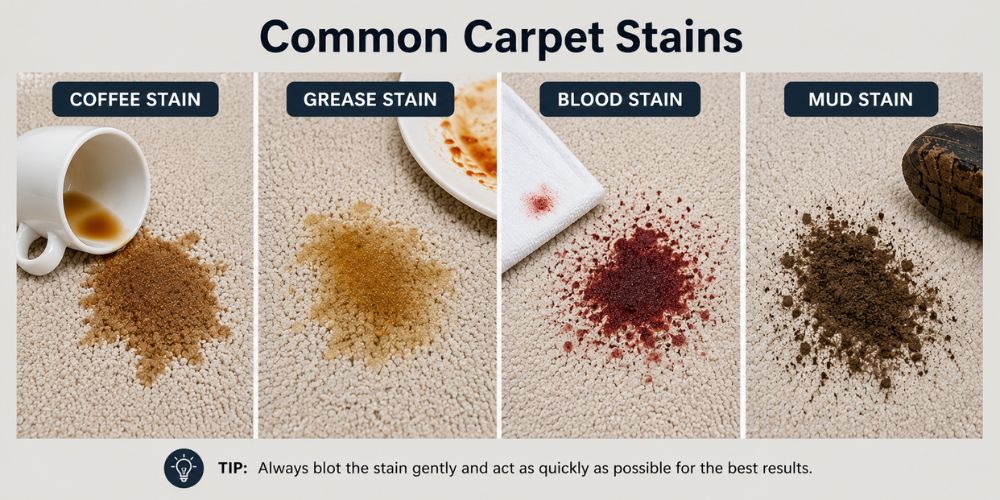
Water-based stains include most drinks, tea, coffee, juice, soft drinks, and similar spills. These are typically the most straightforward to treat, since the staining agents (usually dyes and sugars) dissolve fairly easily in a mild soap-and-water solution.
Oil-based stains come from grease, cooking oil, butter, and oily foods. Oil doesn’t mix with water, which is why plain water alone often just smears these stains around instead of lifting them. They usually need an absorbent powder first to soak up the oil before any liquid cleaner is applied.
Protein-based stains include blood, milk, egg, and certain food residues. Proteins are heat-sensitive, hot water actually causes the proteins to bind more tightly to the fibers, essentially “cooking” the stain in place. Cold water is the safer choice here every time.
Dirt-based stains, like mud and outdoor soil, are deceptively easy to make worse. Cleaning wet mud immediately often just spreads it deeper into the fibers. These stains are usually easiest to manage once they’ve dried completely and the loose particles can be vacuumed away.
Taking thirty seconds to correctly identify the stain type before you touch it can save you from turning a simple spill into a permanent mark.
What to Do Before Removing a Carpet Stain
A few preparation steps make the actual cleaning process far safer and more effective.
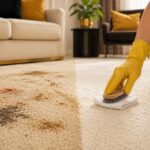
Blot the stain instead of rubbing it. Use a clean white cloth or paper towel and press down gently, lifting straight up rather than dragging the cloth across the carpet. Rubbing pushes the stain deeper into the fibers and can fray or fuzz them permanently.
Remove any solid material first. If food, mud, or another solid substance is involved, carefully scoop or lift it away with a spoon or a dull, flat edge before applying any liquid. Working on top of solid debris just grinds it further into the carpet.
Work from the outside toward the center. Starting at the outer edge of the stain and moving inward keeps the stain contained instead of pushing it outward into clean carpet.
Test the cleaning solution first. Apply a small amount to a hidden section of carpet, inside a closet or under furniture works well, and wait a few minutes to check for discoloration, texture changes, or any adverse reaction before using it on the visible stain.
Avoid excess water. It’s tempting to flood a stain to “wash it out,” but too much liquid soaks through to the carpet backing and padding, which makes the area much harder to dry and can lead to mildew or musty odors later on.
How to Remove Common Carpet Stains at Home
Once you’ve cleared away excess material and blotted up what you can, here’s how to treat each type of stain specifically.
Tea and Coffee Stains
These are some of the most common household stains, and they respond well to prompt treatment.
- Blot the spill immediately with a clean cloth.
- Mix a small amount of mild dish soap with lukewarm water, a teaspoon of soap in a cup of water is usually plenty.
- Dip a clean cloth in the solution and gently blot the stained area, working from the outer edge inward.
- Switch to a second cloth dampened with plain water to wipe away soap residue.
- Blot the area dry with a fresh towel.
Avoid soaking the area, a little solution goes a long way, and repeated gentle blotting works better than one heavy application.
Food and Sauce Stains
Food stains are often a mix of grease, dye, and sugar, so removing the solid material first matters a lot here.
- Carefully lift away any excess food.
- Blot any remaining moisture with a clean towel.
- Apply a small amount of mild soap solution to a cloth.
- Blot gently until the stain begins to lift, checking your progress on the cloth.
- Wipe with a water-dampened cloth to remove soap residue.
- Let the carpet dry completely before walking on it.
Grease and Oil Stains
Because oil repels water, this is one of the few stains where you don’t want to start with a liquid.
- Blot up any excess grease without rubbing, rubbing just spreads the oil across more fibers.
- Sprinkle a generous amount of baking soda or cornstarch directly onto the stain.
- Let it sit for 15–20 minutes so the powder can absorb the oil.
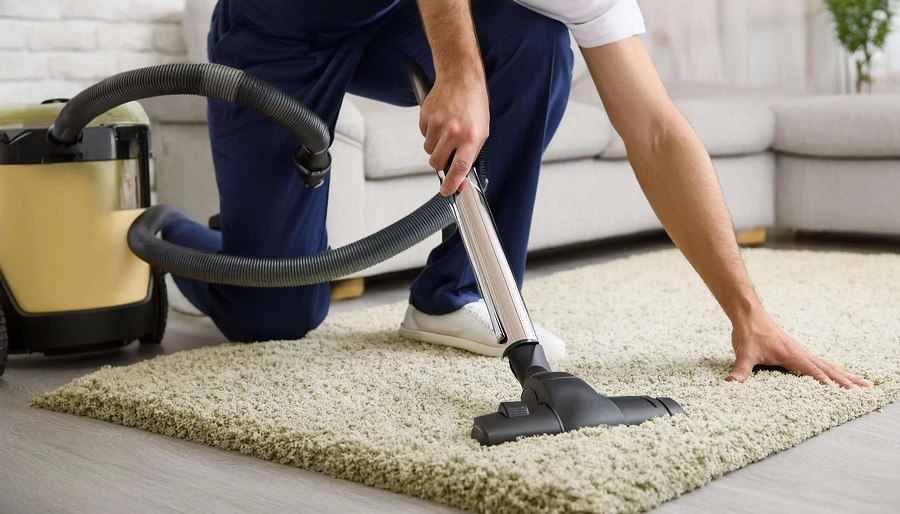
- Vacuum thoroughly to remove the powder along with the oil it’s absorbed.
- If a mark remains, treat it with a small amount of mild dish soap solution.
- Blot and allow the area to air dry.
Ink Stains
Ink is one of the trickiest stains because rubbing spreads it almost instantly and different ink types respond to different treatments.
Blot, never rub, with a clean cloth as soon as you notice the stain. Depending on the type of ink and your carpet material, a carpet-safe solvent-based cleaner may be recommended; always patch-test it on a hidden area first, since solvents can affect carpet dye. For large or already-spread ink stains, a professional cleaner is often the safer and more reliable option, since the wrong home remedy can set the stain permanently.
Pet Urine Stains
Pet accidents require quick attention for a reason most people don’t think about: the odor can linger long after the visible stain is gone, because urine seeps below the surface.
Blot up as much moisture as possible right away, then use a carpet-safe pet stain cleaner formulated to break down the odor-causing compounds, regular soap and water alone often isn’t enough. Avoid the temptation to simply mask the smell with fragrance sprays, since that only hides the problem temporarily. If the urine has soaked through to the padding, surface-level cleaning won’t fully remove the source, and you may need a deeper clean or professional treatment.
Mud and Dirt Stains
Counterintuitively, the best first step here is to do nothing.
- Let the mud dry completely rather than trying to clean it wet, which just smears it deeper into the fibers.
- Once dry, gently break up the dried material by hand.
- Vacuum up the loose dirt thoroughly.
- Apply a small amount of mild cleaning solution to whatever mark remains.
- Blot gently and let the area dry.
Blood Stains
Fresh blood should always be treated with cold water, never hot. Heat causes the proteins in blood to bind more tightly to carpet fibers, essentially locking the stain in place instead of lifting it out.
Dampen a clean cloth with cold water and blot the area repeatedly, switching to a clean section of the cloth as it picks up the stain. Avoid saturating the carpet, repeated light blotting works better than one heavy soak. For dried, large, or stubborn blood stains, professional cleaning is usually the more reliable route.
How to Remove Old or Set-In Carpet Stains
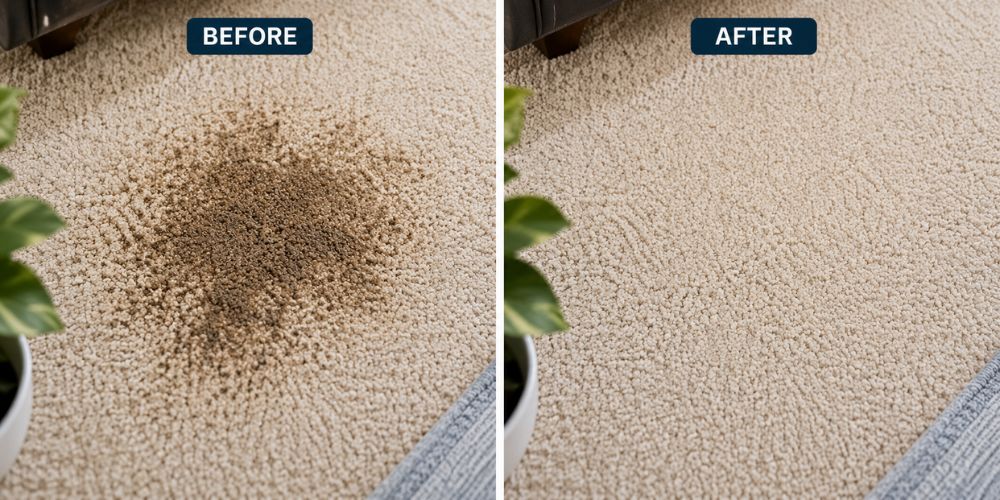
Older stains are harder to deal with because the substance has often dried directly into the fibers or worked its way down toward the backing, out of reach of surface cleaning.
Start by vacuuming the area if there’s any loose, dried residue. Identify the original stain type as best you can, and choose the carpet-safe cleaning method that matches it. Apply the solution sparingly, and give it time to work according to the product’s instructions rather than reapplying repeatedly right away.
Blot rather than scrub, and rinse away any leftover residue with a small amount of clean water afterward. If the stain is still visible after one careful, complete attempt, resist the urge to try a different product on top of it, layering multiple cleaning solutions on the same spot can leave chemical residue behind or cause discoloration that’s worse than the original stain. At that point, it’s usually time to bring in a professional who has access to deeper-cleaning equipment.
Natural Carpet Stain Removal Methods
Some people prefer household ingredients over commercial cleaners for smaller stains, and several genuinely work well. That said, “natural” doesn’t automatically mean “safe for every carpet,” so always patch-test before use.
Baking soda is useful for absorbing moisture, loosening greasy residue, and neutralizing odors. Sprinkle a small amount over the affected area, let it sit, and vacuum thoroughly afterward.
Diluted white vinegar is sometimes used for general household stains and odors. If you try this, always dilute it with water first (a common ratio is one part vinegar to two or three parts water) and test it on a hidden section, since vinegar’s acidity can affect certain dyes and carpet fibers.
Cornstarch works similarly to baking soda for absorbing surface grease. Sprinkle it over the stain, let it sit for a short period, vacuum it up, and treat any remaining residue with a mild cleaning solution.
Avoid experimenting with these methods on delicate, hand-dyed, wool, or specialty carpets, what’s gentle on a synthetic carpet can still cause discoloration on a more sensitive material.
How to Remove Carpet Stains Without Damaging the Fibers
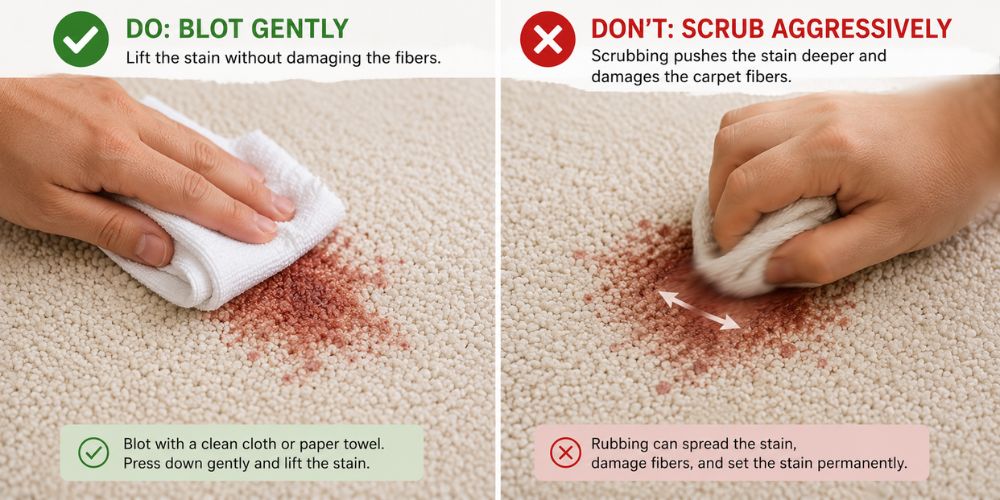
It’s entirely possible to “win” against a stain while still damaging the carpet in the process, usually because the cleaning technique itself was too rough. Keep these principles in mind every time you clean:
Use gentle pressure. Blot with a straight-down pressing motion rather than scrubbing back and forth. Aggressive rubbing frays fibers, causes fuzzing, and can leave a permanently matted patch even after the stain is gone.
Use minimal moisture. Excess water travels down into the backing and padding, which not only makes drying harder but can also contribute to mold or mildew if it’s not fully dried out.
Choose carpet-safe products. Not every household cleaner is formulated for carpet. Check the product label and, when possible, your carpet manufacturer’s care recommendations before applying anything new.
Avoid mixing cleaning products. If one method doesn’t fully work, don’t layer a second or third product on top hoping for a stronger effect. Mixing chemicals can trigger unwanted reactions and cause damage that’s worse than the original stain.
Use clean, white cloths. Colored towels can transfer their own dye onto damp carpet fibers. White cloths also make it easy to see exactly how much of the stain is lifting as you work.
How to Dry Carpet After Removing a Stain
Drying is just as important as the cleaning itself. Leftover moisture in the carpet or padding is one of the most common causes of musty smells and long-term carpet problems.
- Blot the area with a dry towel, pressing firmly to absorb as much moisture as possible.
- Improve airflow around the space, open a window or a door if you can.
- Use a fan pointed at the area to speed up evaporation.
- Let the carpet dry fully before placing furniture, rugs, or anything heavy back over the spot.
- Avoid walking heavily over the area while it’s still damp, since foot traffic on wet carpet can re-flatten and mat the fibers.
How to Deodorize Carpet After Stain Removal
Sometimes a carpet looks perfectly clean but still carries a lingering smell, especially after food spills or pet accidents.
For minor surface odors, sprinkle baking soda lightly over the dry carpet, let it sit for several hours (or overnight for stronger smells), then vacuum it up thoroughly. This works well for odors that are limited to the surface fibers.
If an odor persists even after cleaning and deodorizing, it’s a sign that whatever caused it has likely reached deeper into the padding or subfloor. At that point, simply adding more fragrance or baking soda won’t solve the underlying issue, you’re treating the symptom, not the source. This is one of the clearest signals that it’s time for a deeper clean or professional inspection.
Common Carpet Stain Removal Mistakes to Avoid
A handful of well-intentioned mistakes are responsible for most of the “stains” that never should have become permanent in the first place:
- Rubbing or scrubbing the stain aggressively instead of blotting
- Using excessive water, which pushes the problem into the padding
- Applying hot water to protein-based stains like blood or milk
- Using bleach on colored or patterned carpet
- Skipping the patch test before trying a new cleaning solution
- Mixing different cleaning chemicals together
- Leaving the carpet damp for too long after cleaning
- Repeatedly treating the same stain with different products, one after another
If you’re ever unsure whether a method is safe for your specific carpet, it’s better to stop and research (or call a professional) than to risk permanent damage.
Carpet Stain Removal Tips for Homes With Kids and Pets
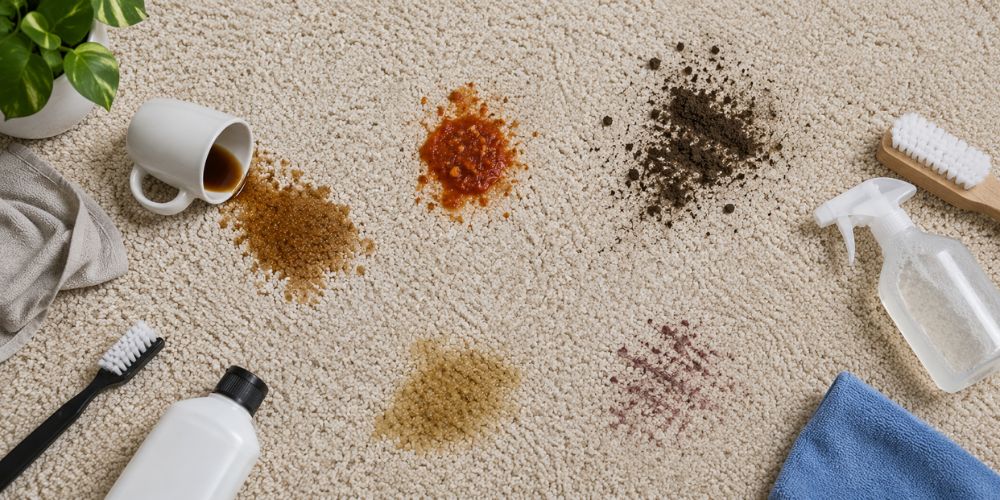
Households with children and pets deal with spills and accidents far more often, so a little preparation goes a long way. Keep a small “stain kit” easily accessible, clean white cloths, paper towels, a mild carpet-safe cleaner, and a vacuum within reach, so you’re never scrambling when something spills.
Treat spills the moment they happen rather than letting them sit, even if it’s inconvenient timing. For pet accidents specifically, focus on eliminating both the visible stain and the underlying odor, since pets are drawn back to spots that still smell like previous accidents, which can turn a one-time spill into a recurring problem. If accidents happen frequently in the same area or the smell doesn’t fully go away, there’s a good chance moisture has reached the padding underneath.
Beyond spot-treating, regular vacuuming and periodic deep cleaning help prevent everyday dirt and residue from building up and settling permanently into the fibers over time, which keeps future stains easier to treat as well.
When Should You Call a Professional Carpet Cleaner?
DIY methods handle the vast majority of small, fresh stains well, but there are situations where it genuinely makes more sense to bring in a professional rather than risk making things worse:
- The stain is old or has already set into the fibers
- A large area of carpet has been affected
- The carpet is wool, silk, antique, or another delicate material
- The stain has soaked through to the carpet padding
- A strong odor remains even after cleaning and deodorizing
- Paint, dye, or another particularly stubborn substance is involved
- You’ve already attempted a careful cleaning and the stain is still visible
- You’re simply unsure which method is safe for your carpet
Professional carpet cleaners use specialized equipment, like hot water extraction and industrial-strength, carpet-safe solutions, that can reach deeper into the carpet and padding than most household techniques ever could. For anything beyond a fresh, contained stain, the cost of a professional visit is often far lower than the cost of replacing a carpet that’s been damaged by an aggressive DIY attempt.
Final Thoughts
Learning how to remove stains from carpet properly can save you from turning everyday spills into permanent marks. The core principles are simple, even if the specific method changes depending on the stain: act quickly, blot instead of rubbing, match your cleaning method to the type of stain, and keep moisture to a minimum throughout the process.
Small, fresh stains are almost always manageable at home with a little patience and the right technique. Older stains, delicate carpets, deep-set odors, and anything that’s reached the padding are usually better left to a professional who has the tools to fix it properly the first time.
When you’re genuinely unsure whether a method is safe, remember that protecting the carpet matters more than trying every remedy you can find online. A careful, well-matched cleaning approach will do more to preserve your carpet’s appearance, texture, and lifespan than any aggressive one-time fix ever could.