
While beautiful with their softness, elegance, and amazing silky look, viscose rugs require special care in order to remain as beautiful as they appeared when they were bought. Water, friction, improper cleaning agents, and high temperatures are some of the common causes of viscose rug damage, which can present in the form of unpleasant watermarks, yellow spots, and altered texture.
Therefore, the question ‘how to clean a viscose rug’ is a common one, and the answer to it is vacuuming and spot-cleaning on a regular basis, as well as avoiding any wet cleaning methods whenever possible. However, if water damage, severe staining or overall rug discoloration occurs, then a professional upholstery cleaning service must be contacted to assess the situation and determine the best possible course of action.
Why Are Viscose Rugs Difficult to Clean?
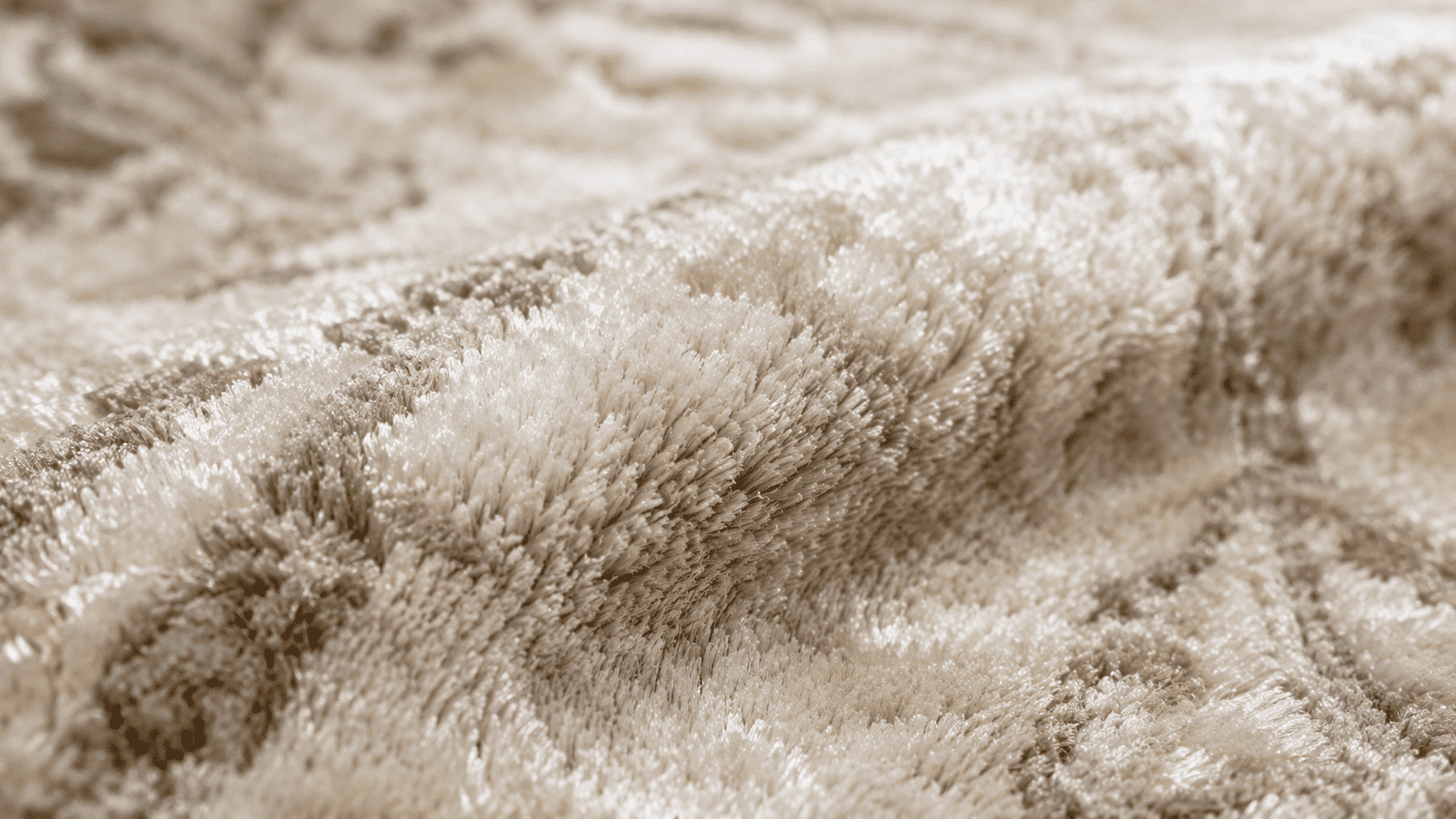
Viscose is a regenerated cellulose fiber also known as rayon, art silk, artificial silk, or bamboo silk. Viscose offers a nice soft touch and very attractive glossy surface, which makes it very desirable for use in decorative rugs but also poses some challenges in terms of cleaning this type of rug.
Exposure to excess water or aggressive cleaning may cause:
- Watermarks
- Browning of cellulosic material
- Pile distortion
- Altered texture
- Loss of sheen
- Migration or colour change of dyes
Hence, this type of rug should not be cleaned in the same way as a synthetic or wool rug. A professional cleaner will take the appropriate steps by identifying the fibres, assessing the condition of the rug, and conducting tests to establish a suitable cleaning process.
Can You Clean a Viscose Rug at Home?
Yes, but regular maintenance is different from deep cleaning.
The rug itself should have no dry, loose soil on it or only require you to get out a small amount of moisture from an occasional spill.
For regular maintenance, you should:
- check the manufacturer’s recommendations,
- remove dry, loose soil by vacuuming,
- remove any spill immediately,
- do not scrub,
- do not saturate with water, and
- allow the rug to dry.
You should stop trying to clean at home if the spill is spreading or the rug’s foundation is being compromised.
If there is severe staining, water damage, browning, or you have no knowledge of what the rug is made of. You should have it professionally cleaned.
How to Clean a Viscose Rug Safely
1. Check the Rug Label First
Before cleaning anything, you will need to check the rug label and decide on the rug fibre composition. Some rugs can be made from blends of viscose; others may be referred to as rayon, art silk, or bamboo silk. The structure and backing of the rug may also play a part.
If the label is missing, do not assume that the rug is like an ordinary carpet.
2. Remove dry dirt gently
Dry soil may penetrate the rug and destroy its shine. A light vacuuming will remove the loose particles of dust and dirt. Do not use heavy brushes or other tools to clean the rug since they can damage the delicate filaments of the rug.
The removal of as much dry soil as possible before considering any moisture is an important step in safe viscose rug care.
3. Blot spills immediately
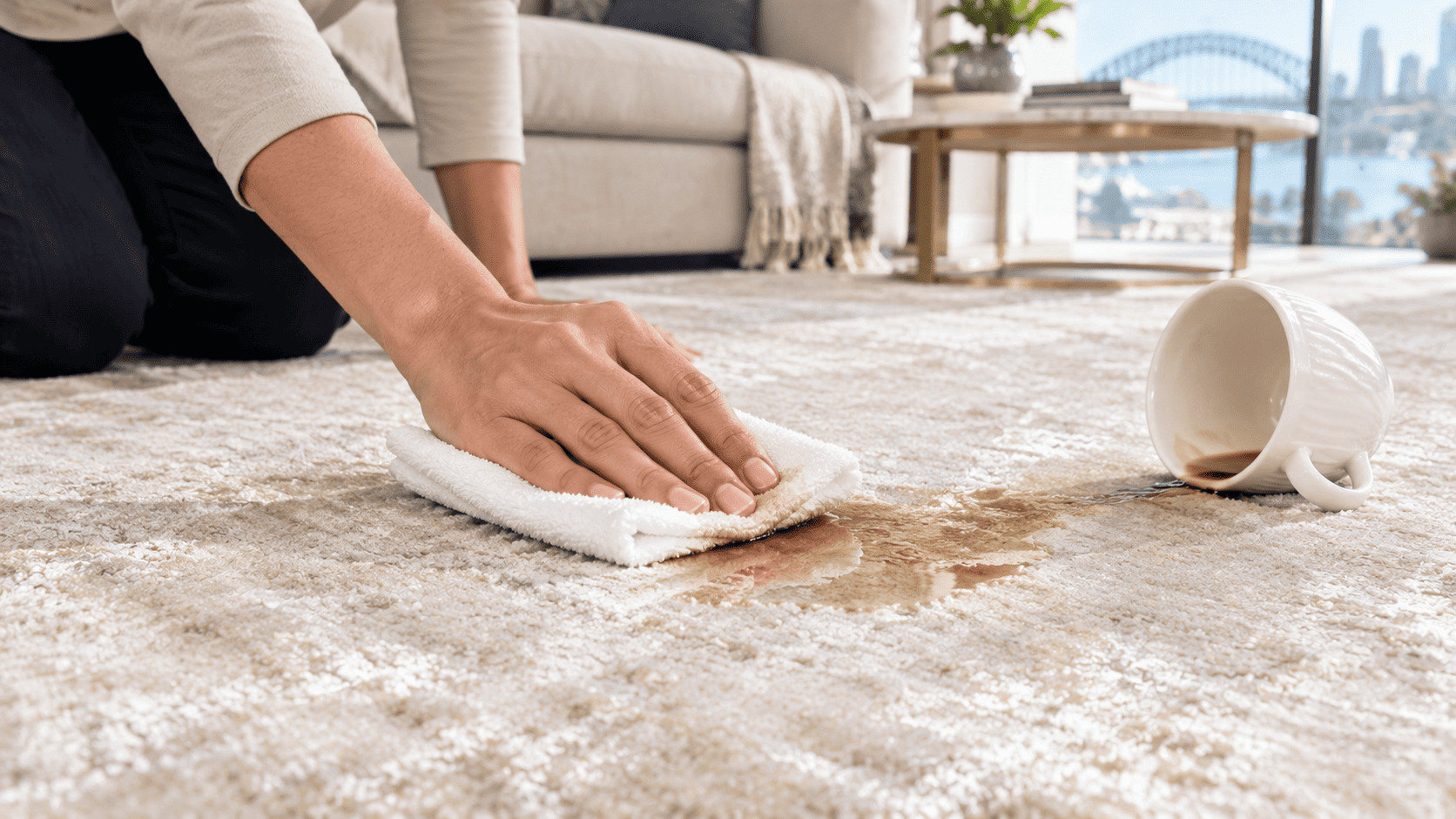
If you had a drink or something else liquid on your rug, make sure to blot it. Place a clean absorbent white cloth on the liquid spot and gently blot. Do not rub backwards and forwards. Rubbing can disturb the pile and spread the spill beyond the normal area.
Do not add any more water on top of the stain unless you want to dilute it. With viscose, more moisture can cause a much bigger cleaning problem.
4. Avoid excess moisture
One of the most common mistakes is to use too much water when cleaning viscose rugs. Viscose is often very sensitive to water, and wet cleaning of the rug or repeated wet cleanings can lead to browning, watermarks, or other changes in appearance.
The professional cleaner should assess which method is least aggressive but still gives acceptable results instead of adding more water or using more aggressive chemicals.
5. Let the rug dry properly
Drying is as important as the cleaning process. A viscose rug should be dried quickly and evenly with good airflow. Left too damp can increase the risk of unwanted changes to the fibres.
Professional cleaning recommendations suggest prioritising airflow rather than excessive heat, especially in humid conditions.
What Should You Avoid When Cleaning a Viscose Rug?
Some common carpet-cleaning methods are not automatically suitable for viscose.
Avoid:
- Soaking rugs
- Hard scrubbing
- Aggressive brushing
- Strong household chemicals
- Bleach
- Excessive heat
- Repeatedly wetting the same area
- Standard carpet cleaning methods without checking fibre suitability
- Trying to remove a stubborn stain by using a succession of different treatments.
If the first treatment has failed to produce the desired result, adding more treatments is not necessarily the answer. With delicate fibres, it is often the case that stopping at the right point can prevent a minor stain becoming a major problem.
Can You Steam Clean a Viscose Rug?
It is often sensitive to moisture and can also be affected by aggressive action or high temperatures. Both factors could lead to deformation of pile appearance, watermarking, or other fibre-related issues.
In such cases, it is better to assess the fabric and its properties first to determine an appropriate method of rug maintenance. Cleaning should not be treated as a standard cleaning solution for viscose rugs.
Viscose is sensitive to moisture and can also react poorly to excessive heat or agitation. The combination can contribute to changes in pile appearance, watermarks, or other fibre-related problems.
Instead of assuming that steam cleaning is suitable, the rug should be inspected and its fibre and construction considered before a cleaning method is selected.
How to Remove Stains From a Viscose Rug
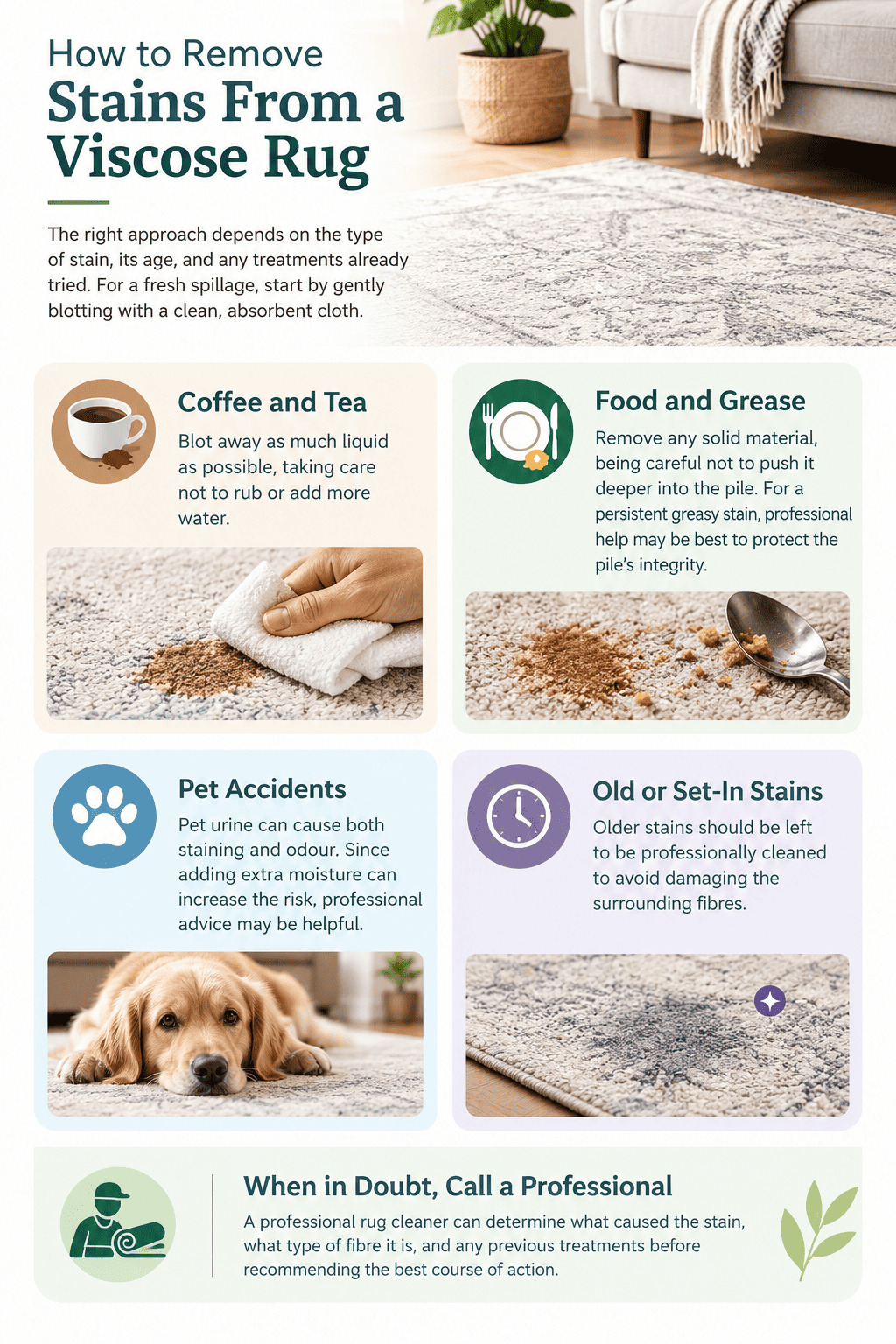
The correct action will depend on the type of stain, its age, and any treatments that have already been tried. For a fresh spillage, start by gently blotting with a clean absorbent cloth.
Coffee and Tea
Blot away as much liquid as possible, taking care not to allow further absorption by rubbing or adding more water.
Food and Grease
Remove any solid material, taking care not to push it deeper into the pile. For a persistent greasy stain, professional intervention may be preferable to prevent further risk to the pile’s integrity through unwise use of domestic cleaning agents.
Pet Accidents
Pet urine can present both a staining and an odour problem. Because adding extra moisture to a viscose rug presents additional risks, professional advice may be helpful in assessing the merits of any proposed course of action.
Old or Set-In Stains
Older stains should be left to be professionally cleaned to avoid damaging the surrounding fibres.
A professional rug cleaner will be able to determine what has caused the stain, what type of fibre it is, and any previous treatments it may have been given before suggesting a suitable course of action.
Why Sydney Conditions Matter When Drying a Viscose Rug
Sydney’s fluctuating weather conditions may impact the time needed for a damp rug to dry.
Humidity and reduced air circulation can prolong drying time significantly and have particular importance for the drying of moisture-reactive fibres like viscose.
A professional solution for water-damaged rugs in Sydney will therefore utilise controlled drying processes, as opposed to leaving a cleaned rug to dry out slowly.
Australian professional cleaning guidelines highlight the importance of rapid and even drying, and note that humid coastal conditions can have particular importance for moisture management.
How Professionals Clean Viscose Rugs

Professional viscose rug cleaning is not just about picking a more powerful cleaning solution – many other factors should be taken into consideration, including:
Fibre & Condition Assessment
The rug is assessed to establish the type of fibre, construction, existing stains, and any potential damage to the rug.
Colourfastness Testing
Due to the differing reactions that different colours can have to moisture and cleaning solutions, it is vital that testing takes place before any cleaning commences.
Moisture Sensitivity Testing
A small area of the rug can be tested in order to establish how sensitive the pile is to moisture.
Dry Soil Removal
Dry soil can be removed from the rug before any moisture is added during the cleaning process.
Low Moisture Cleaning
Where possible, a low-moisture cleaning solution can be used to prevent excess moisture from being added to the rug.
Controlled Spot Treatment
Stains can be treated individually rather than treating the whole rug at once, thus reducing the amount of cleaning solution that is used.
Controlled Drying
The rug can be dried using airflow, which helps to accelerate the drying process.
Final Inspection
The rug can be re-examined to ensure that the cleaning process has not altered the appearance or condition of the rug.
This inspection and testing regime is an important part of a professional viscose rug cleaning service.
When Should You Call a Professional Viscose Rug Cleaner?
Professional cleaning is worth considering when:
- The entire rug needs cleaning
- There are multiple stains
- The rug has water damage
- Brown or yellow areas have appeared
- The pile has changed direction or texture
- A previous DIY treatment has left marks
- You are unsure whether the rug is actually viscose
- The rug is valuable or particularly delicate
If you’re not sure how your viscose rug will respond to cleaning, the option to get it assessed before applying products can be much safer than trying multiple DIY methods.
Viscose Rug Cleaning in Sydney
At Devine Rug Care, we know that delicate rugs such as viscose rugs require a different process than your average carpet cleaning.
Our team will take the time to assess your rug’s fibre and condition, as well as the best method of cleaning. From dealing with staining, general soiling, or rugs that have already been damp cleaned, our goal is to clean your rug to the highest standard without damaging its appearance.
Frequently Asked Questions
Can you wash a viscose rug?
Viscose rugs should not be treated like washable synthetic rugs. Excessive moisture can affect viscose fibres, so the rug should be assessed before any wet-cleaning method is used.
Can I clean a viscose rug with water?
Small spills should generally be blotted rather than treated by soaking the rug. Excessive water can increase the risk of watermarks, browning and texture changes.
Can you steam clean a viscose rug?
Steam cleaning is not automatically suitable for viscose. Because heat, moisture and agitation can affect delicate fibres, the rug should be assessed before this type of cleaning is considered.
How do you remove stains from a viscose rug?
For a fresh spill, gently blot the affected area with a clean absorbent cloth. Avoid rubbing or repeatedly applying water. Difficult or old stains are better assessed by a specialist.
Why does a viscose rug turn brown after cleaning?
Brown discolouration can occur when moisture interacts with cellulose-based fibres and other materials within the rug. Prolonged dampness can increase this risk.
Can I use vinegar on a viscose rug?
Avoid experimenting with household cleaning solutions unless the rug manufacturer specifically recommends them. Viscose can react unpredictably to moisture and chemicals.
How often should a viscose rug be professionally cleaned?
There is no single schedule for every viscose rug. Cleaning frequency depends on foot traffic, household conditions, pets, staining, and the rug’s condition. Regular gentle maintenance can help reduce the need for intensive cleaning.
Is professional viscose rug cleaning safer than DIY cleaning?
For significant staining, water damage, or full-rug cleaning, professional assessment can reduce the risk associated with excessive moisture, unsuitable chemicals, and aggressive treatment.
Final Thoughts
A viscose rug can add a luxurious look and feel to your home, but it needs careful maintenance.
For everyday care, focus on gentle vacuuming, quick spill response, and avoiding unnecessary moisture. When deeper cleaning is required, fibre identification, testing, controlled moisture, and proper drying are important.
If you’re unsure how to clean your viscose rug without damaging its appearance, professional assessment is the safest place to start.
For specialist viscose rug cleaning in Sydney, contact Devine Rug Care on 02 9982 1000.