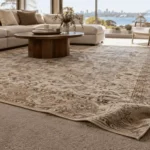
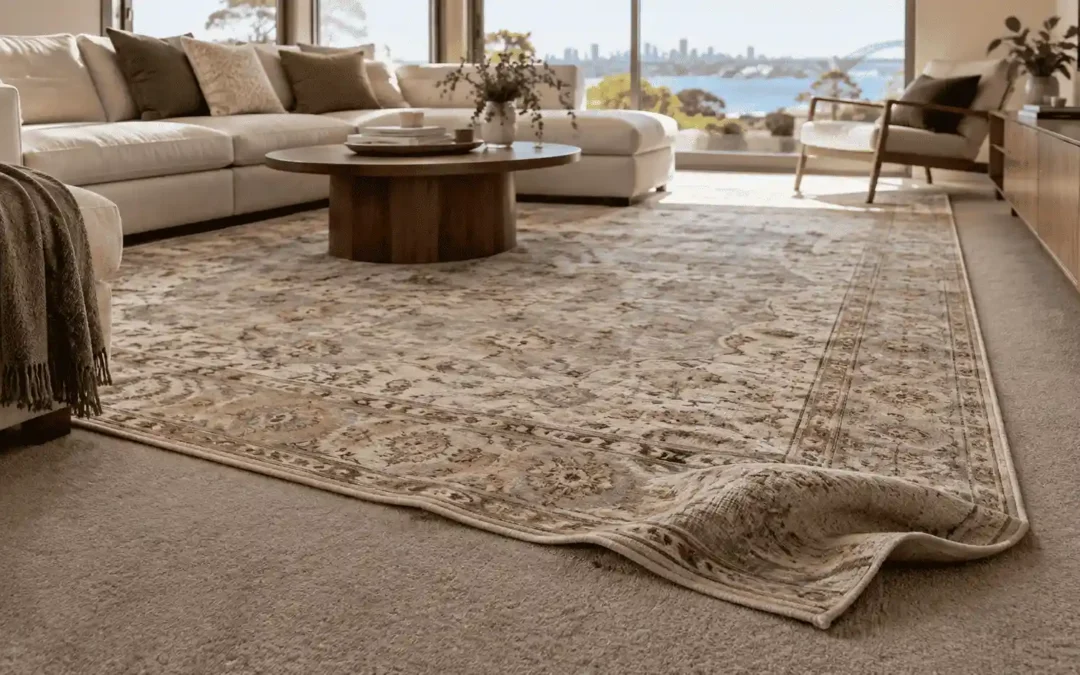
Has your rug ever been put on top of your carpet, only to find it creeping days later? Initially, it may have seemed like a minor issue, but now you’re somehow dealing with a rug that is bunched up in the center, curled at the edges, or has moved off its designated spot.
To prevent slipping, bunching, or curling, you will need to use an appropriate rug pad or rug underlay according to the type of rugs and carpet fibers you have. It is equally important to know which products will suit your specific rug/carpet and which methods to avoid.
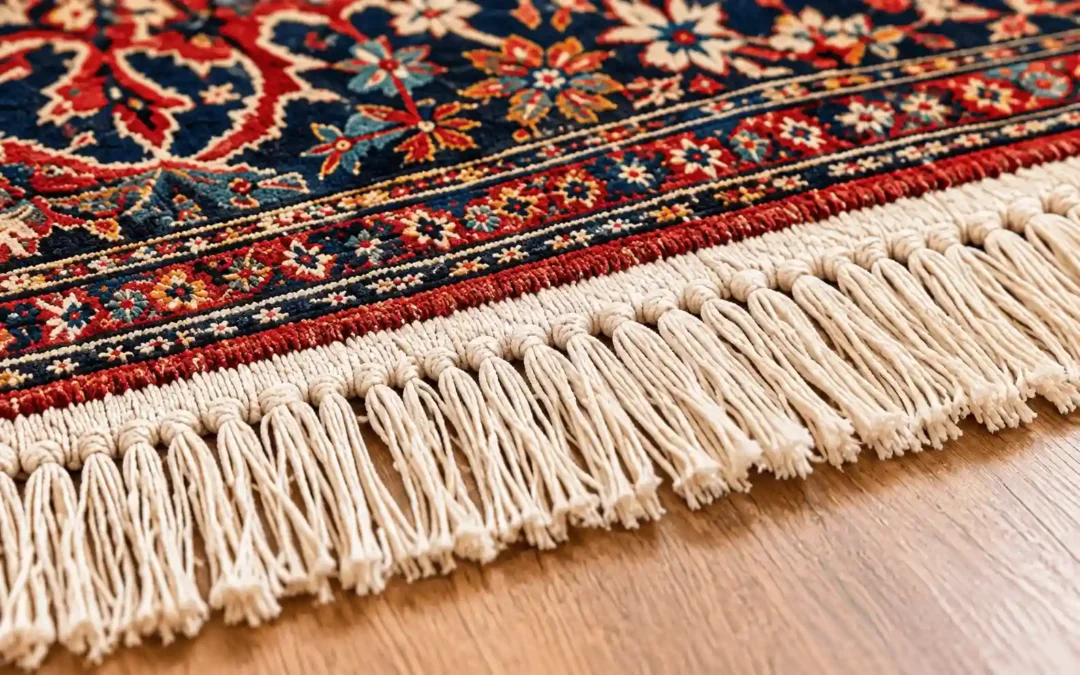
Some rugs like Persian carpets, Oriental rugs, wool rugs, handmade rugs, vintage rugs, or any other sensitive kinds of rugs need to be looked after and taken care of properly. Using the wrong kind of grip or adhesive products may damage the rug permanently or leave behind residue that would make the rug difficult to walk on.
Why Does a Rug Slip on Carpet?
It might seem odd, but a rug on another soft surface can shift around. Carpet is not totally stable, and can be shifted around by pressure.
Every time you step on a rug, the carpet underneath it can be shifted. Repeated shifting can cause the rug to slowly walk itself across the floor in one direction.
Some rugs are more susceptible to walking than others. Lighter rugs, thin flatweaves, and rugs with smooth backs generally offer less resistance to movement. A plush or thicker carpet can also contribute to the issue
Other causes for a rug walking around include:
- Heavy foot traffic
- Pets running over the rug
- Children running and playing on the rug
- Vacuuming the rug
- Smooth or worn back on the rug
- A plush or high pile carpet
- A small rug for the space
- A worn or inappropriate rug pad
If a rug keeps walking itself around, it can pucker, wrinkle or curl at the edges. Not only does this look bad, but it can also cause a tripping hazard if it gets bunched up.
How to Stop Rugs Slipping on Carpet
The right solution depends on the rug and the carpet underneath it. Here are some of the most practical options to prevent rugs from sliding.
1. Use a Carpet-to-Carpet Rug Pad
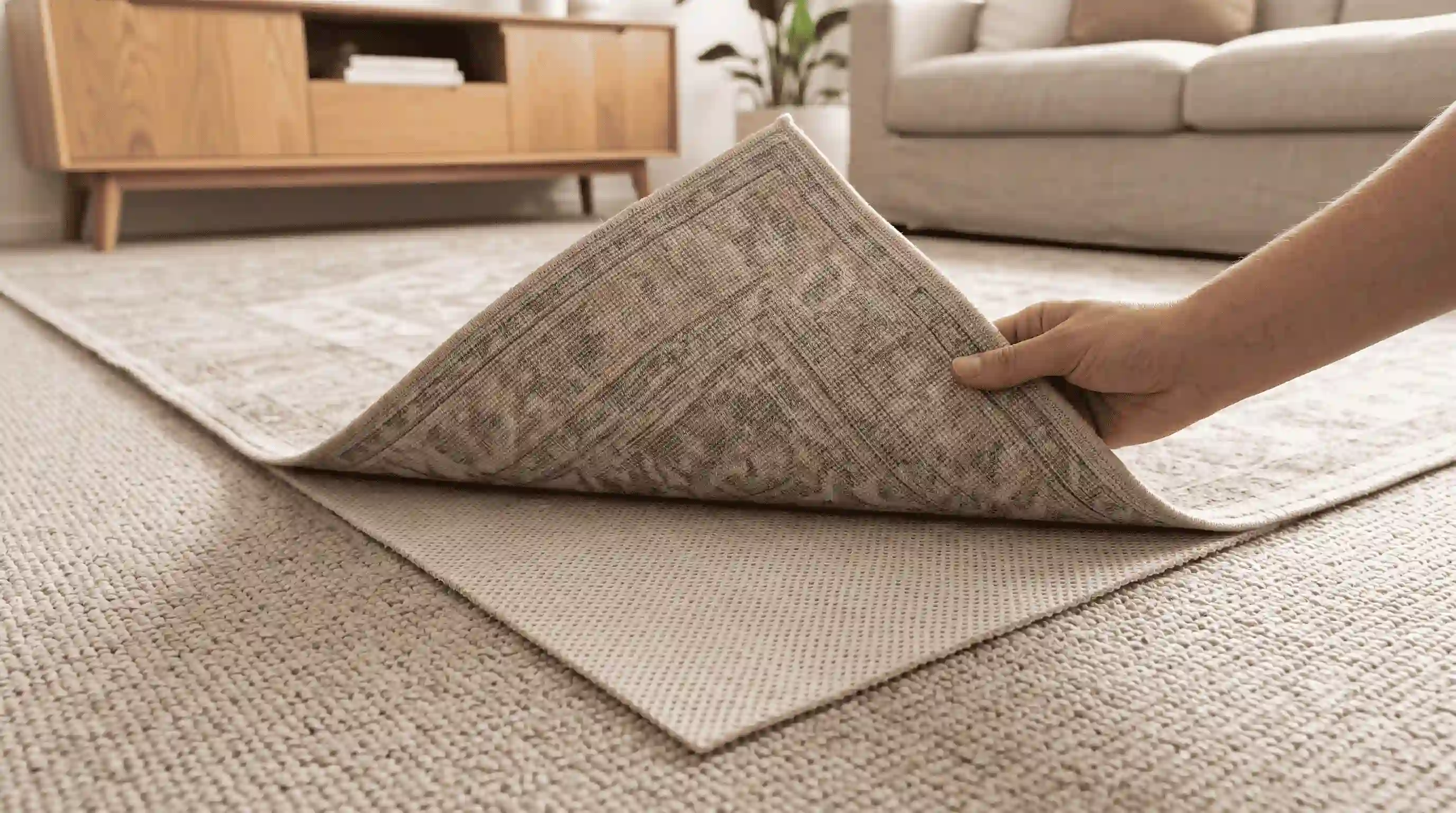
A good carpet to carpet pad is often the simplest solution.
It prevents the rug from slipping due to foot traffic and provides cushion and support.
However, do not buy any old pad, many pads are made for use on hard surface such as timber, tiles, or vinyl.
A pad designed for use on hard floorboards may not have sufficient grip or cushion to be effective when placed between your carpet and rug.
Make sure you buy a pad that is suitable for use on carpet to carpet and always follow the manufacturer’s instructions.
The pad also needs to be the correct size, if the pad is too small the rug will still slide and if it is too big it will be seen around the edge of the rug.
2. Choose the Right Rug Underlay
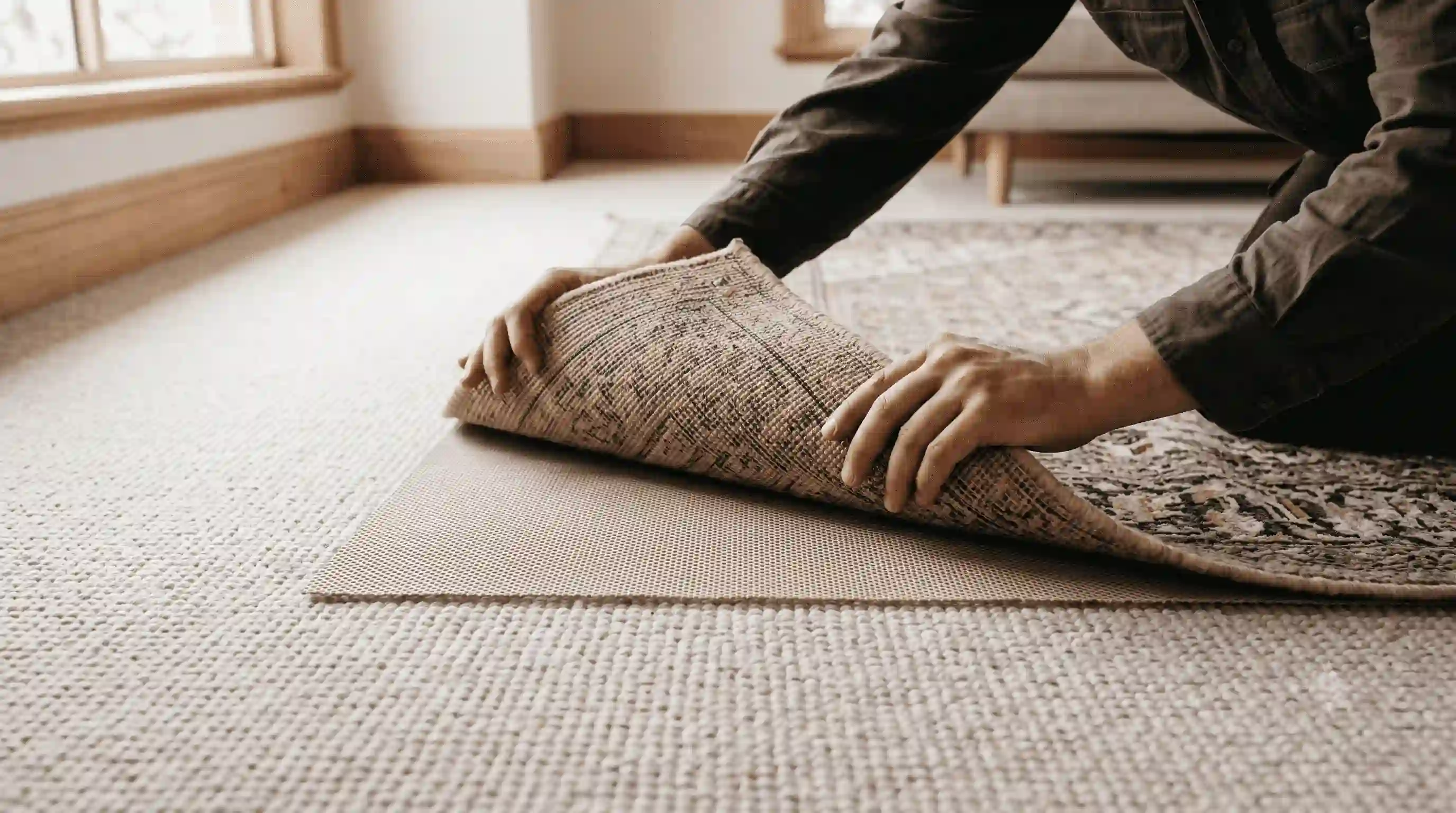
A good rug underlay can do more than just prevent the rug from slipping. It can give the rug extra support, whilst reducing the amount of friction between the rug and your carpet.
When selecting your rug underlay keep in mind the thickness of both the rug and the carpet, as too thick an underlay underneath a thick rug can actually cause the rug to feel more insecure.
Make sure the rug underlay stays underneath the rug and doesn’t come out along the edges.
If you have an expensive or delicate rug, make sure that the rug underlay is appropriate for the type of backing and fibres on your rug before using it.
3. Try Rug Grippers for Smaller Rugs
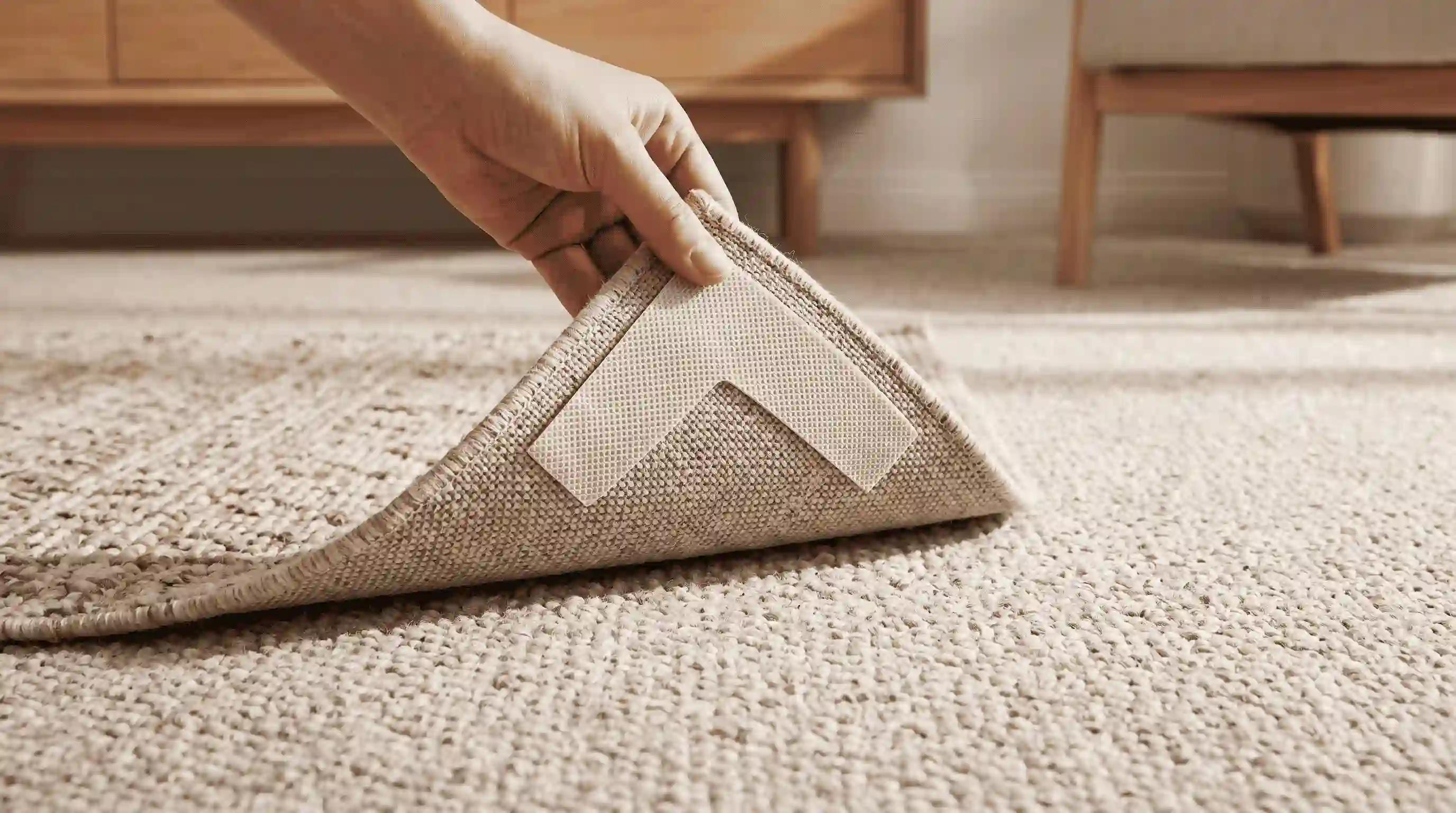
Rug grippers could be a great solution for smaller rugs that are slippery and often slide on the floor.
The addition increases the coefficient of friction between the rug and the floor, thus preventing it from sliding. However, it will not work well on all carpets. A gripper is most efficient when used on a relatively thin carpet, and a thick and fluffy one might defeat it in the tug-of-war for dominance.
It is vital to make sure that the particular rug gripper will adhere to the rug backing material and the carpet.
4. Use Rug Tape Carefully
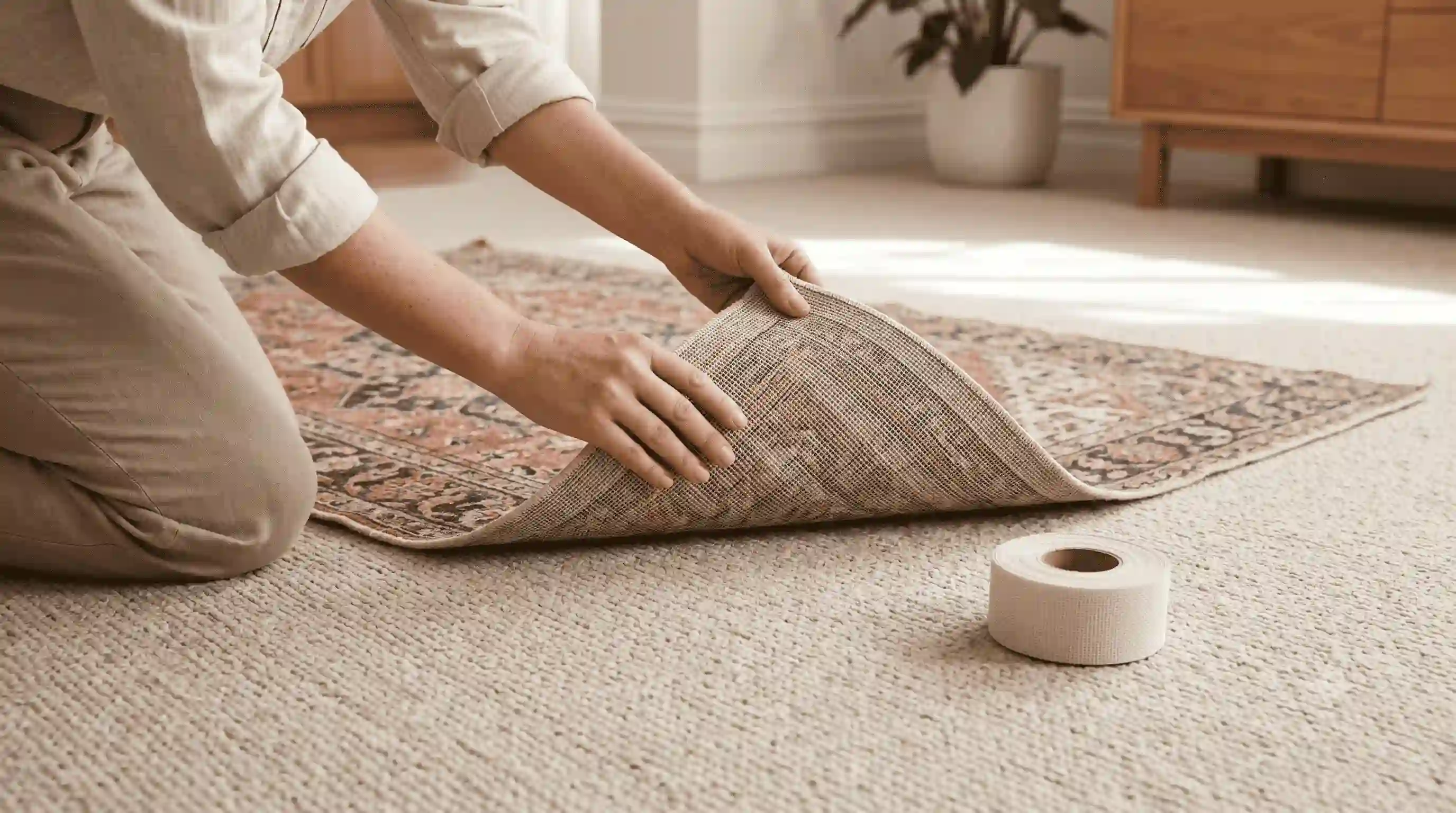
If your rug has corners, edges, or other elements that just will not hold, you may need to use rug tape to fix it. This especially goes for carpets with such finishes.
Though heavy double-sided tapes may seem like a good option, they can often only do so much. In fact, the stronger the adhesive, the more likely it is to ruin delicate or sensitive backing materials typically found on handmade, old, or exotic rugs.
Before using any rug tape, be sure to know what solutions you have and which of them are compatible with the rug’s materials. If not, consult the manufacturer or specialist. Do not attempt to use heavy tapes on delicate rugs without professional advice.
5. Use Furniture to Help Keep a Rug in Place
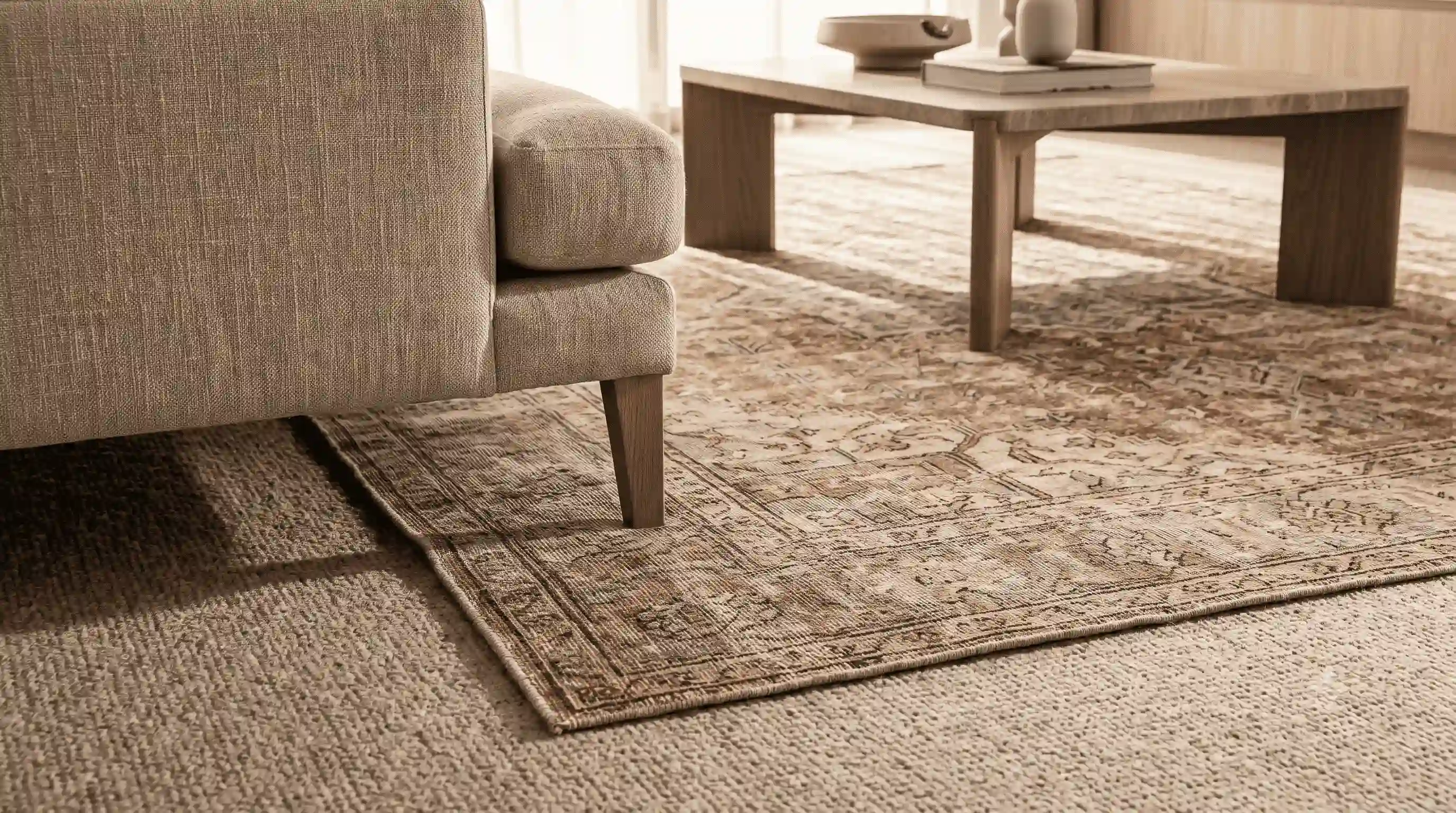
Furniture can be used to anchor a large rug by placing the front legs of a sofa or bed on it, as well as using coffee tables or dining tables. This will prevent slipping and sliding as much as possible, but it should only be done with rugs that are already the right size and mostly on the floor.
It can also be combined with a rug pad or underlay, which may be necessary for a large rug with a significant amount of surface area exposed.
6. Choose the Right Rug Size and Weight
The size and weight can make a big difference.
Smaller and lighter rugs are much easier to shift around than big heavy ones, especially in the hallway, entryway or the living room.
When purchasing a new rug to lay on top of your carpets focus less on the style, but rather on the way it will go with the carpets in terms of size.
A well sized rug will seem less intrusive and hold its place better.
7. Keep the Rug Flat and Check It Regularly
Do not wait until the edge of the rug is severely creased before taking any action
If you can see a corner of your rug coming up or notice that it is slipping simply flatten it back down and look into the cause of it
It is also a good idea to inspect the underside of your rug periodically as dirt or grime or changes to the structure of the rug itself or even an old underlay can effect its’ grip on your carpet.
When cleaning around your rug be especially careful when rearranging furniture or lifting the rug to reveal the carpet beneath. Many types or rugs are susceptible to distortion if pulled or tugged.
Can You Put a Rug Pad on Carpet?
Yes, but you need to choose the right type.
A rug pad designed for a hard floor isn’t necessarily right for use on a carpet. Carpet-to-carpet applications require a solution that works with the carpet as well as the rug.
When choosing a rug pad think about
- The height and type of pile of the carpet,
- The rug’s backing,
- The rug’s weight,
- How much foot traffic there is
- If the rug is hand made or delicate,
- How often you need to move the rug.
If you’re dealing with an expensive or delicate rug, don’t go solely for the best grip, you need to make sure that the material is compatible with the rug as well.
What Is the Best Solution for a Persian or Wool Rug?
Persian, Oriental, wool, and handmade rugs require some additional care to prevent them from slipping.
Their construction and the materials used in their backs may differ, meaning that a product that is a perfect match for one rug may not be suitable for another.
Due to this, a high-quality rug underlay is often a much safer investment than experimenting with heavy-duty adhesives and DIY-friendly fixing products.
Besides, it is recommended to inspect the rug for any ripples, loose threads, or deformations of the backing material if the slipping cannot be resolved on the carpet’s side. These issues should be addressed on the rug’s side, as they are the cause of the instability.
For additional advice on Persian rug maintenance, please visit our Persian rug care and maintenance guide.
How to Stop a Runner From Moving on Carpet
Runners are sometimes problematic due to a combination of their long and thin design and the high foot traffic of the space they are in.
Hallways are a prime example, as people tend to walk up and down them constantly and in the same path, applying pressure to the runner and pushing it out of place.
A good quality rug-to-carpet underlay should help to prevent these issues, and compatible grippers or rug tape for your specific type of rug and carpet can aid in the task.
When walking on a runner, make sure there are none of the following issues:
- Corners curling in
- wrinkles
- bunched up rug sections
- uneven edges
- movement along the length of the runner.
If you notice any of these problems, it is best to stop using the rug and fix the problems rather than continuing to walk on the rug and exacerbating the issue.
How to Stop a Rug From Bunching or Curling on Carpet
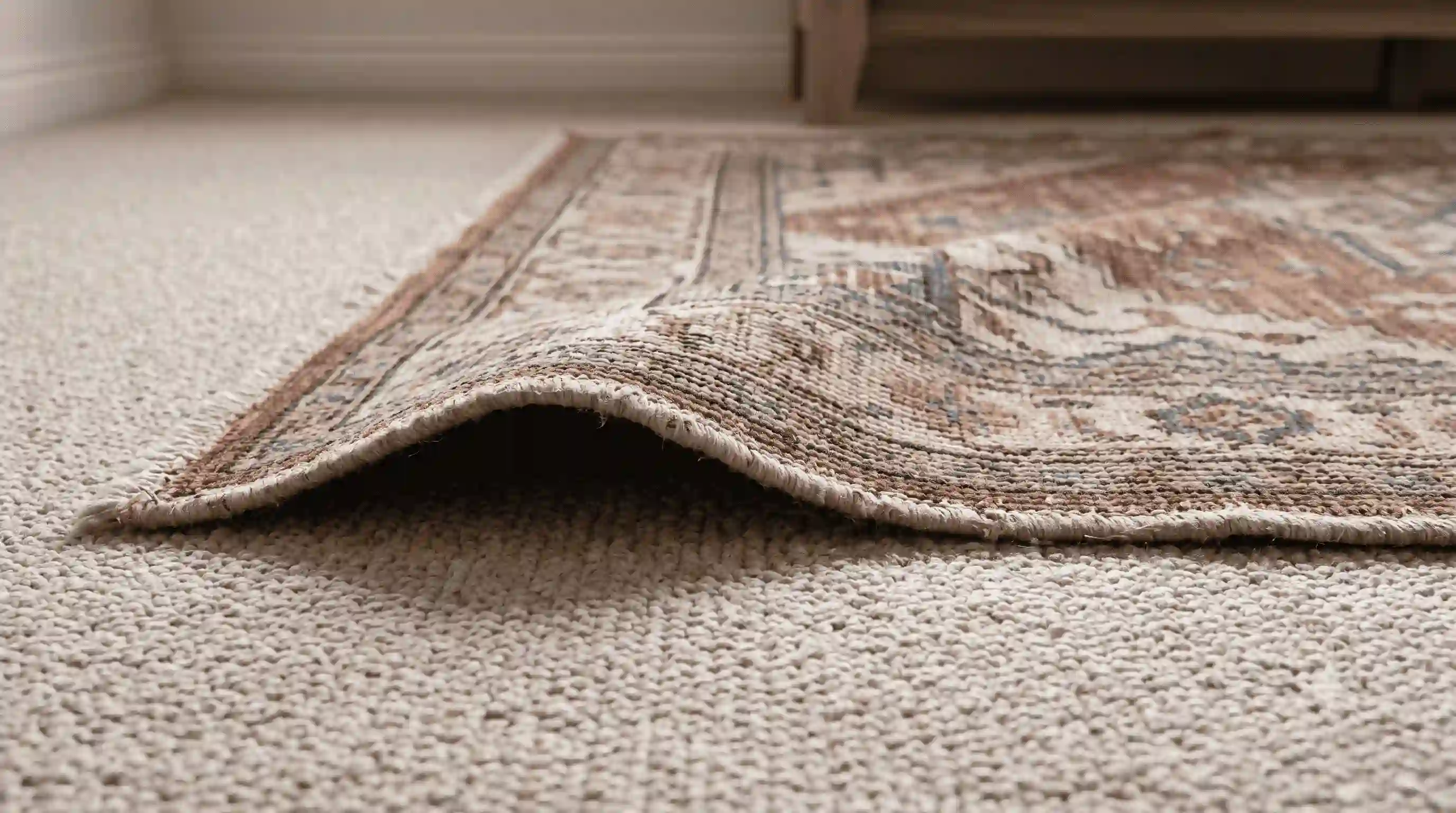
If your rug is always bunched, curled or wrinkled then flattening it every day will do little to prevent this.
First, lift the edges of the rug to ensure that the carpet underneath is clean and flat.
Next, check the rug pad or underlay for the rug to see if it is worn down or incorrectly sized
Do not place objects on the curled corner to hold the corner down as a permanent fix, while it might make the rug lay flatter for a while, it will do little to prevent the problem.
If the rug’s edges keep curling or wrinkling, you may need to have the backing and construction of the rug professionally looked at.
Is Double-Sided Tape Safe for Rugs?
Not always.
Double-sided tape can work for some rugs, but its suitability depends on the rug backing, the adhesive, and the carpet underneath.
A strong adhesive may leave residue or affect the backing when removed. This is especially important with:
- Persian rugs
- Oriental rugs
- Handmade rugs
- Antique or vintage rugs
- Delicate natural-fibre rugs
- Rugs with older or fragile backing
Before using any adhesive product, read the instructions carefully and check whether it is suitable for your rug.
If you’re unsure, particularly when the rug is valuable, professional advice is a safer option.
How to Choose the Right Anti-Slip Solution for Your Rug
Before buying a rug pad, underlay, gripper, or tape, consider the following questions.
What type of carpet is underneath?
Low-pile and high-pile carpets behave differently. A solution that works on a dense, low-pile carpet may not provide the same results on a thick, plush carpet.
How heavy is the rug?
A lightweight rug generally needs more help staying in place than a heavy rug.
What is the rug backing made from?
The backing affects which products can be safely used underneath the rug. Always check compatibility before applying adhesives or grip products.
How much traffic does the area receive?
A rug in a quiet bedroom has different requirements from a runner in a busy hallway.
Is the rug valuable or delicate?
If you have a Persian, Oriental, antique, handmade, or otherwise valuable rug, protecting the rug should be just as important as stopping it from moving.
When Should You Get Professional Rug Advice?
When your rug is still slipping despite the use of a suitable pad or underlay, don’t continue to seek out a stronger product without professional advice.
Professional advice is particularly important in the case that your rug is;
- Antique or vintage
- Handmade
- Persian or Oriental
- Delicate fibres
- Show signs of backing deterioration
- Persistent ripples
- Valuable or difficult to replace
A professional rug-care expert will be able to look at the rug and determine whether the fault lies with the backing, construction, carpet, or the anti-slip product.
Regular professional rug cleaning in Sydney with Devine Rug Care can help maintain your rug in good condition as well as addressing other faults before they become more difficult to manage.
Final Thoughts
Learning to prevent rugs from slipping on carpet is not a question of the strongest possible grip. The most effective solution of all depends on the specific rug, its backing, the type of carpet and the amount of traffic.
For most rugs, a carpet-to-carpet anti-slip rug pad or anti-slip underlay is the safest and most effective solution. In the case of smaller rugs, suitable grippers may also be a good option. Moreover, to fix large rugs, furniture can also help. In addition, rug tape can also help in some cases, but it should be used with care.
However, if you have tried all the options, but your rug slips, curls, or wrinkles on the carpet, this is a sign that something is wrong. This may be due to the characteristics of the rug itself.
Taking the time to choose the right anti-slip solution can help keep your rug flat, safe, and looking its best for longer.
Frequently Asked Questions
Why does my rug keep moving on carpet?
A rug can move because the carpet pile compresses and shifts under repeated foot traffic. Lightweight rugs, smooth backings, plush carpets, and busy areas can make the problem more noticeable.
What is the best way to stop a rug slipping on carpet?
A suitable carpet-to-carpet rug pad or underlay is often a good starting point. The right option depends on the rug’s backing, weight, construction, and the type of carpet underneath.
Can I use a normal rug pad on carpet?
Not necessarily. Some rug pads are made specifically for hard floors and may not work well on carpet. Always check that the product is suitable for carpet-to-carpet use.
Do rug grippers work on carpet?
They can, although their effectiveness depends on the rug and the type of carpet. They may be less effective on thick or plush carpets where the carpet fibres can move underneath them.
Can double-sided tape damage a rug?
Some adhesives can leave residue or affect certain rug backings, particularly when removed. Always check compatibility before using tape, especially on delicate, handmade, antique, or valuable rugs.
How do I stop a runner from moving on carpet?
A suitable rug-to-carpet underlay can help stabilise a runner. Depending on the rug and carpet, compatible grippers or rug tape may also help.
How do I stop a rug from bunching on carpet?
Start by making sure the rug is lying flat and has suitable support underneath it. If it continues to bunch, check the rug backing, carpet pile, and condition of the rug pad or underlay.